- Free shipping on all orders over $200 (US) and $300 (International)

$45.00 – $70.00Price range: $45.00 through $70.00
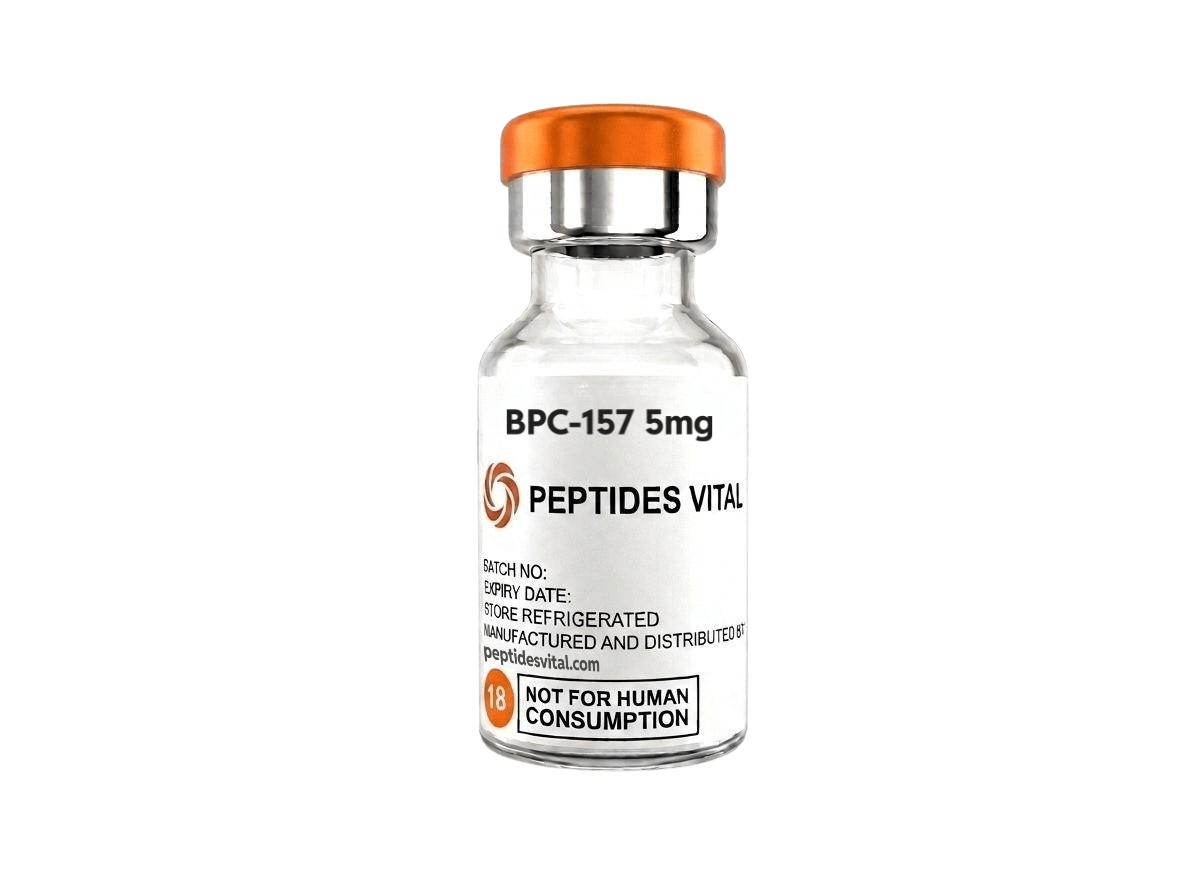
BPC-157, or Body Protection Compound-157, is a synthetic pentadecapeptide with the sequence Gly-Glu-Pro-Pro-Pro-Gly-Lys-Pro-Ala-Asp-Asp-Ala-Gly-Leu-Val, derived from a partial sequence of a protein identified in human gastric juice, first characterized in the early 1990s. It has a molecular weight of 1,419.53 g/mol and the molecular formula C62H98N16O22, CAS 137525-51-0. BPC-157 is one of the most extensively studied peptides in tissue-repair research, notable for remaining stable across a wide pH range, including acidic conditions, an unusual property for a peptide of this size. It is produced exclusively through solid-phase peptide synthesis and appears as a white lyophilized powder. This is a lyophilized powder vial intended for research use, not a capsule or oral supplement. This product is strictly for research purposes only.
ℹ️ Note: 1 kit includes 10 vials
Free shipping on all orders over $200 (US) and $300 (International).
Every batch is HPLC & Mass Spectrometry verified. Full lab reports are available for every order within 30 days of purchase.
Your transactions are protected by our private, encrypted network. Supporting secure wire transfers and international invoicing.
BPC-157 is a synthetic pentadecapeptide, a chain of 15 amino acids, sequence Gly-Glu-Pro-Pro-Pro-Gly-Lys-Pro-Ala-Asp-Asp-Ala-Gly-Leu-Val, molecular formula C62H98N16O22, molecular weight 1,419.53 g/mol, CAS 137525-51-0. It is derived from a partial sequence of a larger protein found in human gastric juice, first isolated and characterized in the early 1990s.
BPC-157 is among the most heavily researched peptides in the tissue-repair category, primarily through animal models rather than human trials. Published preclinical research has investigated it for gut lining repair, tendon and ligament healing, and angiogenesis (new blood vessel formation), with proposed mechanisms centered on VEGFR2 pathway activation and nitric oxide signaling. It’s worth noting for research context that in 2023 the FDA added BPC-157 to its list of bulk drug substances that present significant safety risks for compounding, a regulatory development relevant to anyone tracking this compound’s status, and that comprehensive human clinical trial data remains limited.
BPC-157 is water-soluble and stable across a wide pH range, unusual for peptides of this size. It does not occur independently in nature, it is produced through solid-phase peptide synthesis in the laboratory, and appears as a white lyophilized powder. This product is strictly for research purposes only.
PubChem Reference: View compound profile on NIH PubChem
BPC-157, or Body Protection Compound-157, is a synthetic pentadecapeptide — a chain of 15 amino acids. Its sequence is Gly-Glu-Pro-Pro-Pro-Gly-Lys-Pro-Ala-Asp-Asp-Ala-Gly-Leu-Val, with a molecular formula of C62H98N16O22 and a molecular weight of 1,419.53 g/mol (CAS 137525-51-0). The peptide is derived from a partial sequence of a larger protein found in human gastric juice called BPC, which was first isolated and characterized in the early 1990s.
BPC-157 is water-soluble and stable across a wide pH range, which is unusual for peptides of this size. In its research-grade form, it appears as a white lyophilized (freeze-dried) powder. It does not occur independently in nature — it is produced through solid-phase peptide synthesis in the laboratory.
This product is strictly for research purposes only. Not approved for human or animal use.
PubChem Reference: View compound profile on NIH PubChem
BPC-157, short for “Body Protection Compound-157,” lives up to its name in research settings. Originally discovered in human gastric juice, this peptide demonstrates an impressive ability to protect and heal various tissues throughout the body. What makes BPC-157 particularly fascinating is its stability – unlike many peptides that break down quickly, BPC-157 remains stable in harsh conditions, including stomach acid, making it an ideal subject for diverse research applications.
This product is strictly for research purposes only. Not approved for human or animal use.
Formula: C62H98N16O22
Weight: 1419.54 g/mol
CAS: 137525-51-0
Sequence: Gly-Glu-Pro-Pro-Pro-Gly-Lys-Pro-Ala-Asp-Asp-Ala-Gly-Leu-Val
Form: White to off-white lyophilized powder
Solubility: Readily dissolves in water
Stability: Remarkably stable in various pH conditions
Storage: Keep refrigerated 36‑46 °F (2‑8 °C)
| Weight | 0.08 lbs |
|---|---|
| Dimensions | 0.87 × 1.18 × 0.87 in |
| Size | 5mg, 10mg |
Most BPC-157 research comes from animal models studying gastrointestinal healing, tendon-to-bone repair, and angiogenesis, with a smaller body of work on its interaction with the nitric oxide and growth hormone signaling systems. Minimal human clinical trial data exists, which is worth stating plainly rather than implying a stronger evidence base than what’s published. Its regulatory flag from the FDA in 2023 is a relevant, factual data point for research-context content.
Gut healing, tendon and ligament repair, angiogenesis, and general tissue regeneration, primarily in animal models.
Minimal; most published evidence is preclinical and animal-based rather than from completed human trials.
The FDA added BPC-157 to its list of compounding safety-risk substances in 2023; it is not an approved drug
Bacteriostatic water, refrigerate 2–8°C.
5mg and 10mg kits, HPLC/MS verified.
| Weight | 5mg, 10mg |
|---|
Reviews
There are no reviews yet.