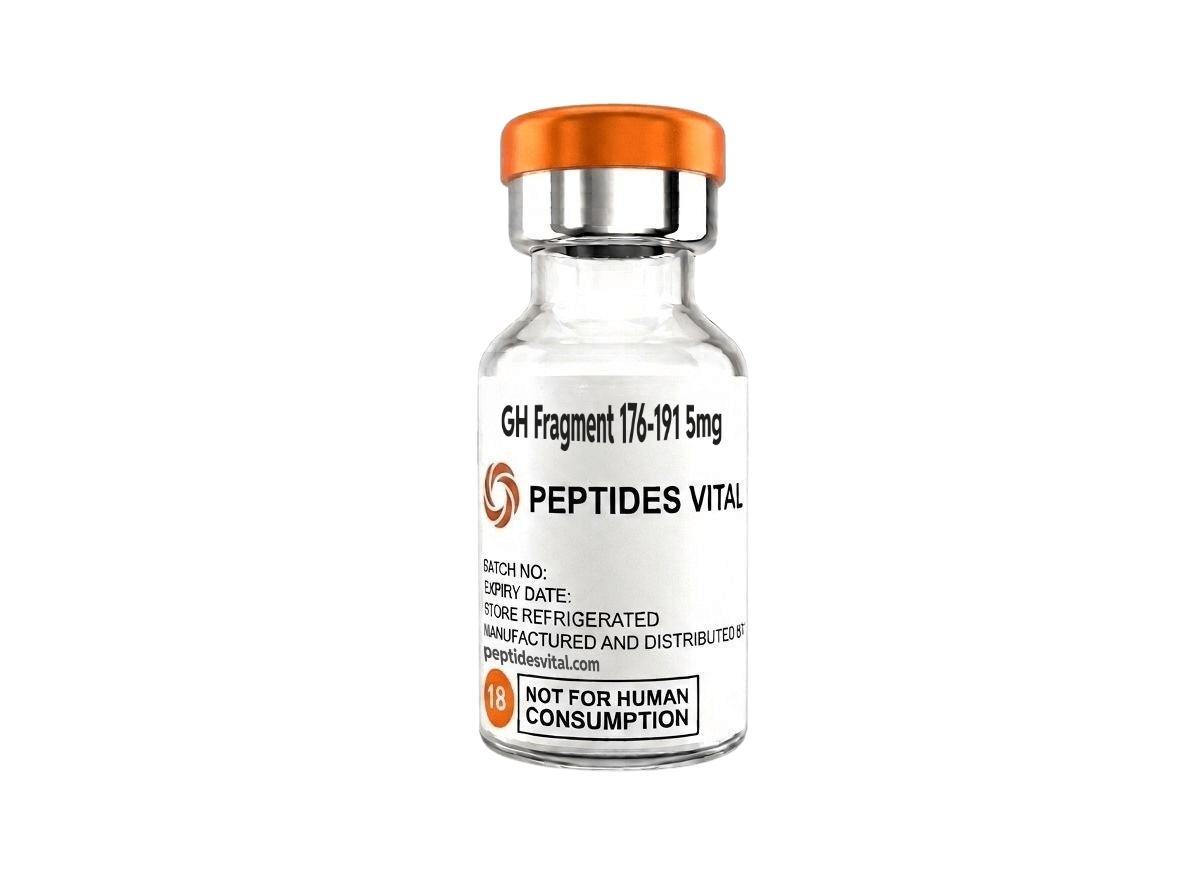
GH Fragment 176-191 is a synthetic peptide consisting of the last 16 amino acids of the 191-amino-acid hGH chain, molecular formula C78H123N23O22S2, molecular weight approximately 1,817.12 g/mol, containing a disulfide bond between two cysteine residues.
This fragment was isolated and characterized as part of a broader research effort to map which regions of the growth hormone molecule were responsible for its different biological effects. Researchers found that the C-terminal 176-191 region retained metabolic, fat-related activity while lacking the GH receptor binding region responsible for hGH’s growth-promoting and blood-sugar effects, making it a useful tool for isolating lipid metabolism research from the rest of hGH’s broader hormonal activity. It represents less than 10% of the full hGH protein by length, and the tyrosine-added variant of this same fragment was later developed into AOD9604.
GH Fragment 176-191 is supplied as a white lyophilized powder that is soluble in water and remains stable under proper refrigerated storage. This product is strictly for research purposes only.
Key Characteristics
GH Fragment 176-191 vs. AOD9604
GH Fragment 176-191 is the unmodified parent sequence; AOD9604 is the same 16-amino-acid region with an added tyrosine residue for stability, developed later by Metabolic Pharmaceuticals for obesity research. Researchers studying this region of hGH may choose either depending on whether they’re working from the original mapped sequence or the more stable modified variant.
MOLECULAR PROFILE
Origin: HGH amino acids 176-191
Size: 16 amino acids
Percentage of HGH: Less than 10%
Structure: Contains disulfide bond
PHYSICAL PROPERTIES
Form: White lyophilized powder
Solubility: Water-soluble
Stability: Stable with proper storage
Storage: Keep refrigerated 36‑46 °F (2‑8 °C)
GH Fragment 176-191 vs. AOD9604
GH Fragment 176-191 is the unmodified parent sequence; AOD9604 is the same 16-amino-acid region with an added tyrosine residue for stability, developed later by Metabolic Pharmaceuticals for obesity research. Researchers studying this region of hGH may choose either depending on whether they’re working from the original mapped sequence or the more stable modified variant.
Frequently Asked Questions :
What is GH Fragment 176-191 studied for?
Fat metabolism and lipolysis research, isolating the metabolic activity of this hGH region from its growth-promoting and blood-sugar effects.
How is this different from AOD9604?
AOD9604 adds a tyrosine residue to this same fragment for stability; this is the original, unmodified sequence.
Was this ever an approved product?
No, it remains a research compound; AOD9604, its modified derivative, went through obesity clinical trials.
How should it be reconstituted and stored?
Bacteriostatic water, refrigerate 2–8°C.
Where can I buy it?
5mg kit, HPLC/MS verified.

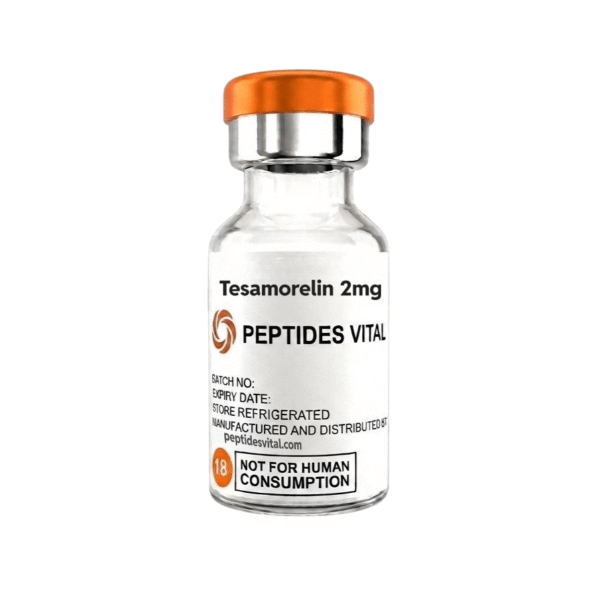
Dr. Marcus Donovan –
Excellent purity on this hGH fragment. The 100% claim held up under HPLC and mass spec. Ideal for research on adipocyte metabolism without the off-target effects of full-length growth hormone
Prof. Angela R. Jimenez –
Flawless reconstitution and stability. 100% purity confirmed in-house. Reliable source for this specific growth hormone fragment already placed a reorder for our ongoing adipose tissue studies
Dr. Henrik P. Lundqvist –
Perfect for our studies on targeted fat oxidation pathways. The 176-191 fragment behaved exactly as expected no GH receptor activation in control assays. Highly recommend for metabolic research
Prof. Natalie S. Chen –
Clean, consistent product across two separate batches. CAS 66004-57-7 verified. Works well in our in vitro lipolysis assays. Would give 5 stars if the shipping to Asia was a bit faster, but the peptide quality is undeniable