Description
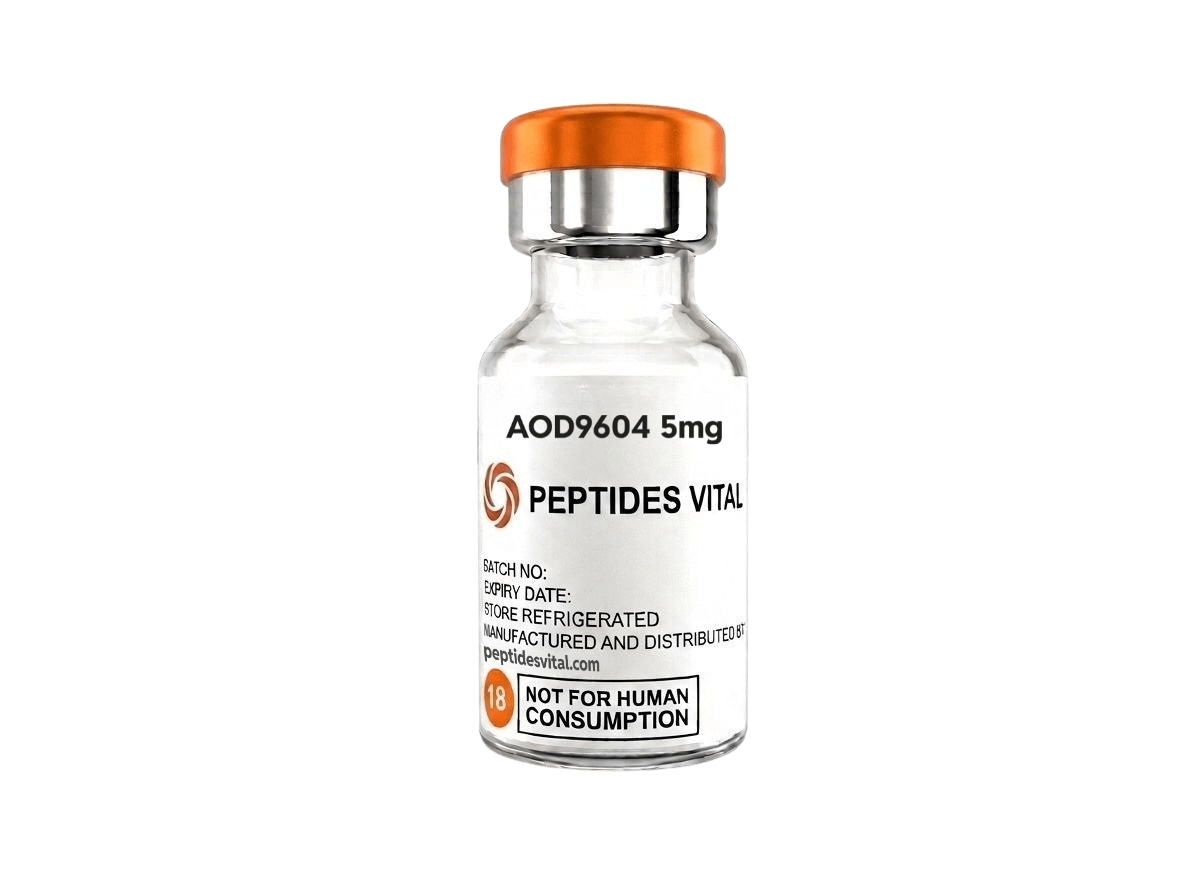
AOD9604 consists of amino acids 176 through 191 of hGH, with an additional tyrosine residue at the N-terminus, molecular formula C78H123N23O23S2, molecular weight approximately 1,815.12 g/mol, containing a disulfide bridge between two cysteine residues that stabilizes its three-dimensional structure.
AOD9604 has a more complete regulatory history than most research peptides in this category. Developed to isolate the fat-metabolizing region of growth hormone from its growth-promoting and blood-sugar-affecting regions, it went through Phase II and Phase III clinical trials for obesity, but did not demonstrate sufficient efficacy against placebo to gain drug approval. Separately, the FDA granted it GRAS status as a food ingredient in 2014, a different and much lower regulatory bar than drug approval, worth being precise about since these are often conflated. Research interest in the compound continues around its lipolytic (fat-metabolizing) activity without the receptor-binding effects responsible for full-length hGH’s growth and insulin-desensitizing properties.
It is classified as a modified peptide fragment and supplied as a white to off-white lyophilized powder that is readily soluble in water. Note that AOD9604 may require a 0.6% acetic acid solution for reconstitution rather than bacteriostatic water, which can cause gelling with this particular compound. This product is strictly for research purposes only.
PubChem Reference: View compound profile on NIH PubChem

Key Characteristics
MOLECULAR PROFILE
Formula: C78H123N23O23S2
Weight: 1815.12 g/mol
Origin: HGH Fragment 176-191 + Tyrosine
Structure: Modified peptide with disulfide bridge
PHYSICAL PROPERTIES
Form: White to off-white lyophilized powder
Solubility: Readily soluble in water
Stability: Excellent with disulfide bridge
Storage: Keep refrigerated 36‑46 °F (2‑8 °C)
AOD9604 in Published Research
Because AOD9604 went through registered obesity clinical trials, more human trial data exists for it than for most research peptides, even though it didn’t reach drug approval. Published trial data showed the compound was well tolerated but did not produce statistically significant fat loss versus placebo at the population level, an important, honest data point rather than an endorsement. Preclinical research has continued to explore its lipolytic mechanism in isolation from hGH’s other effects, which is the main reason it remains of research interest despite the trial outcome.
Frequently Asked Questions :
What is AOD9604 studied for?
Fat metabolism and lipolysis research, isolating this specific mechanism from hGH’s growth-promoting and insulin-desensitizing effects.
Did it pass human clinical trials?
It went through Phase II/III obesity trials but did not show statistically significant fat loss versus placebo, so it was not approved as a drug.
What is GRAS status, and is that the same as drug approval?
No. GRAS (2014) is FDA recognition as a safe food ingredient, a much lower bar than drug approval, which AOD9604 has not received.
How should it be reconstituted?
With a 0.6% acetic acid solution rather than bacteriostatic water, which can cause gelling with this compound specifically.
Where can I buy it?
5mg kit, HPLC/MS verified.


Reviews
There are no reviews yet.