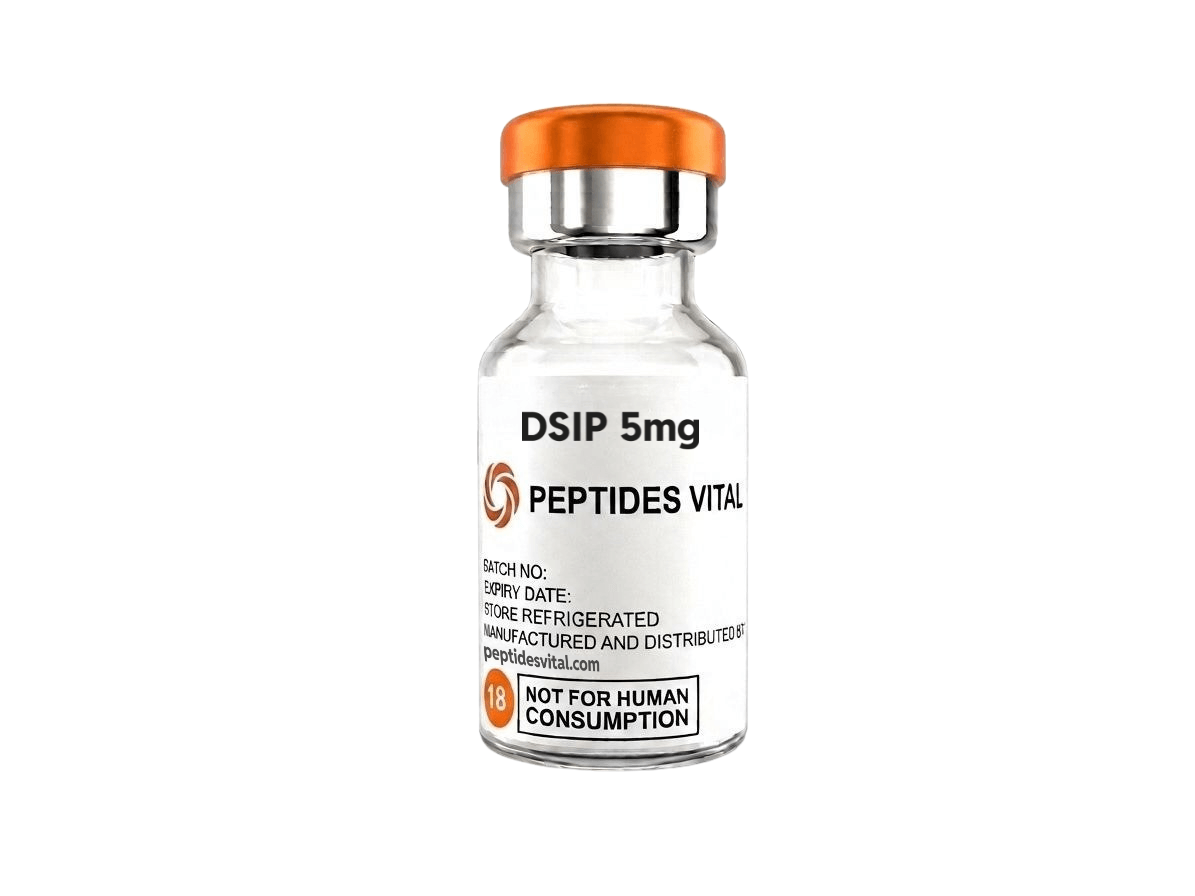
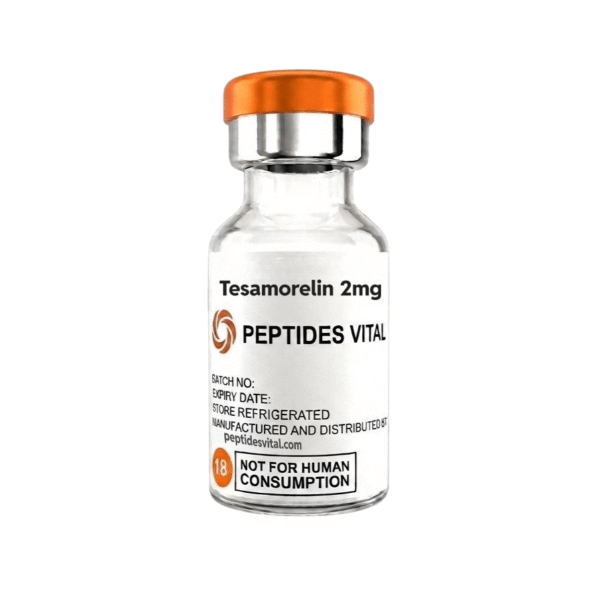
DSIP

Customer Review 4.80
Rated 5 out of 5

Price range: $48.00 through $132.00

Delta sleep-inducing peptide (DSIP) is a naturally occurring nonapeptide — a chain of nine amino acids — with the sequence Trp-Ala-Gly-Gly-Asp-Ala-Ser-Gly-Glu. It has a molecular weight of 848.81 g/mol and the formula C35H48N10O15 (CAS 62568-57-4). First isolated in 1977 from rabbit cerebral venous blood, DSIP is classified as amphiphilic, meaning it contains both water-attracting and water-repelling regions. The tryptophan residue at its N-terminus provides a characteristic UV absorbance signature used for laboratory identification. DSIP is a low-molecular-weight amphiphilic nonapeptide — the selective membrane that separates circulating blood from brain tissue. It appears as a white lyophilized powder that is soluble in water. This product is strictly for research purposes only.

ℹ️ Note: 1 kit includes 10 vials

Share it :
Global Delivery

Free shipping on all orders over $200 (US) and $300 (International).

Purity Guaranteed

Every batch is HPLC & Mass Spectrometry verified. Full lab reports are available for every order within 30 days of purchase.

Secure B2B Payment

Your transactions are protected by our private, encrypted network. Supporting secure wire transfers and international invoicing.

Description

 DSIP is a naturally occurring nonapeptide, a chain of nine amino acids, with the sequence Trp-Ala-Gly-Gly-Asp-Ala-Ser-Gly-Glu. Molecular formula C35H48N10O15, molecular weight 848.81 g/mol, CAS 62568-57-4. It was first isolated in 1977 from the cerebral venous blood of rabbits during induced sleep, discovered by the Swiss research group of Schoenenberger and Monnier.

DSIP’s name reflects its original characterization: early research reported that injecting extracts containing the peptide induced delta-wave (slow-wave) sleep in rabbits. Later research has had a more mixed relationship with that original finding, some studies replicated sleep-related effects, while others found DSIP’s role was better explained by broader effects on stress resistance, circadian regulation, and neuroendocrine signaling rather than a direct sleep-inducing mechanism specifically. It remains a frequently studied compound in circadian and stress-physiology research for this reason, even as the “sleep peptide” framing from its original discovery has been debated in the literature since.

The peptide is classified as amphiphilic, meaning it has both water-attracting and water-repelling regions tied to its mixed hydrophilic and hydrophobic amino acid residues, a property associated with its ability to cross the blood-brain barrier. The tryptophan residue at its N-terminus gives it a characteristic UV absorbance profile used for laboratory identification. In research-grade form, it appears as a white lyophilized powder that dissolves in water. This product is strictly for research purposes only.

PubChem Reference: View compound profile on NIH PubChem

Key Characteristics

MOLECULAR PROFILE

Formula: C35H48N10O15

Weight: 848.81 g/mol

CAS: 62568-57-4

Structure: Trp-Ala-Gly-Gly-Asp-Ala-Ser-Gly-Glu

PHYSICAL PROPERTIES

Form: White lyophilized powder

Solubility: Water-soluble

BBB Penetration: Crosses blood-brain barrier

Storage: Keep refrigerated 36‑46 °F (2‑8 °C)

DSIP in Published Research

 Research on DSIP spans several distinct threads: its original characterization in sleep physiology, later work on stress resistance and HPA-axis (hypothalamic-pituitary-adrenal) regulation, and circadian rhythm studies. Because the original delta-wave sleep claim has had inconsistent replication, more recent research tends to frame DSIP primarily as a stress-physiology and neuroendocrine signaling peptide rather than a sleep-specific compound, worth noting as accurate context rather than repeating the original 1970s framing uncritically.

Frequently Asked Questions :

What is DSIP studied for?

Originally characterized for delta-wave sleep induction; more recent research focuses on stress resistance, circadian rhythm, and neuroendocrine regulation.

Is the “sleep peptide” effect well established?

The original 1977 finding has had mixed replication in later studies; its role in stress physiology is now the more actively researched angle.

What dosage is used in published research?

Older studies used microgram-range doses in animal models; Peptides Vital does not provide human dosing instructions.

How should it be reconstituted and stored?

Bacteriostatic water, refrigerate 2–8°C, store at -20°C for longer-term stability.

Additional information

Weight

5mg, 15mg

5 reviews for DSIP

  1. Dr. Helena M. Strauss

    Delta sleep-inducing peptide performed exactly as expected in our chronobiology studies. The 99% purity was confirmed via reverse-phase HPLC. Reliable source for this delicate 9-amino acid peptide.”
    2. Prof. Andre L. Bouchard

  2. Dr. Priya K. Mehta

    Consistent bioactivity across three separate batches. CAS 62568-57-4 verified in our lab. Ideal for in vitro studies on delta wave regulation. One of the cleaner neuropeptides we’ve sourced this quarter

  3. Prof. Henrik S. Vestergaard

    Perfect for our receptor binding assays. The 99% purity claim held up under mass spectrometry. No unexpected peaks. DSIP from this supplier has become a staple in our neuropeptide library

  4. Dr. Camila R. Flores

    Good stability when stored at -20°C. DSIP showed expected activity in our simulated CSF models. Purity meets research standards. Only minor note the vial could be slightly larger for easier handling, but product quality is solid

  5. Prof. Andre L. Bouchard

    Clean product with no detectable degradation byproducts. DSIP is notoriously tricky to handle, but this lyophilized formulation reconstituted smoothly. Would appreciate slightly faster international shipping, but the peptide quality is excellent.

Add a review

Your email address will not be published. Required fields are marked *