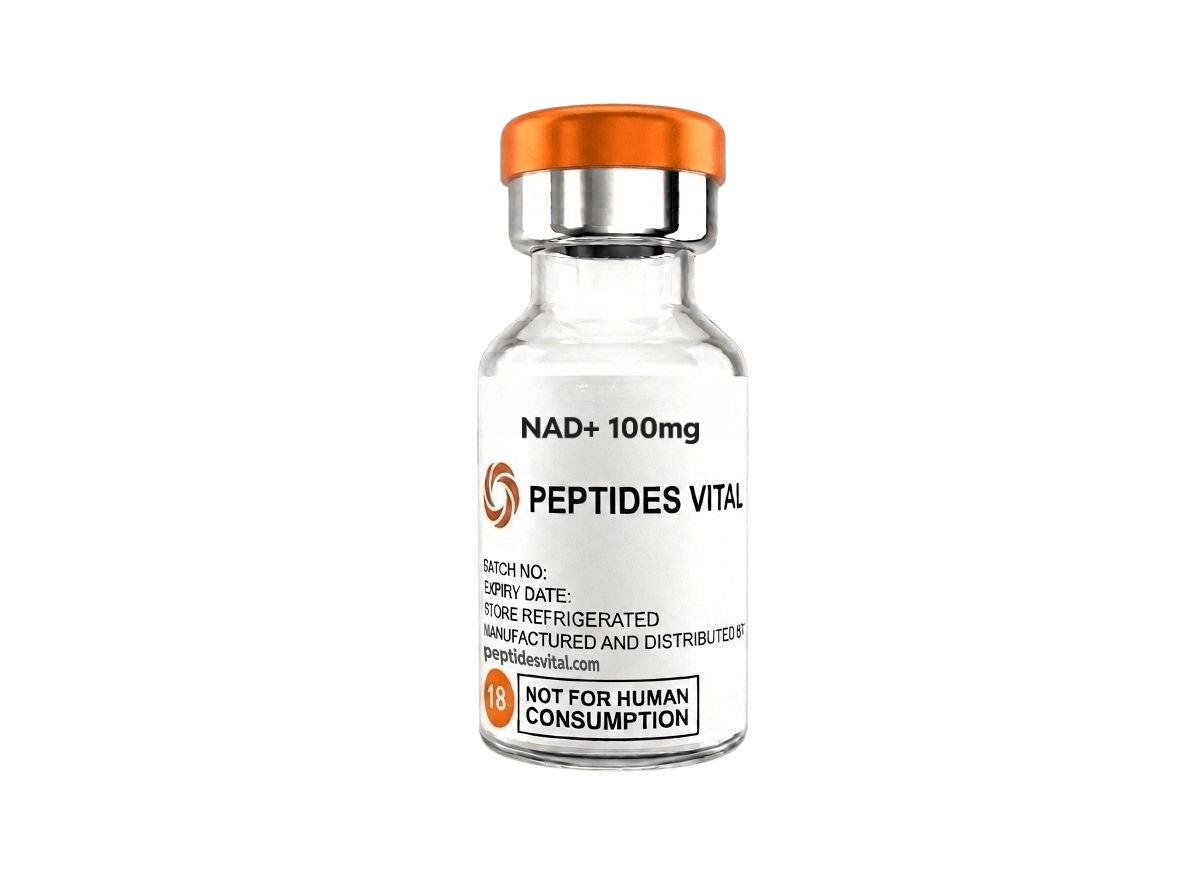
Description
NAD+ is a coenzyme, a small molecule that works alongside enzymes, present in every living cell. It’s a dinucleotide, two nucleotides joined by their phosphate groups, one bearing an adenine base, the other nicotinamide (a form of vitamin B3). Molecular formula C21H27N7O14P2, molecular weight 663.43 g/mol, CAS 53-84-9.
NAD+ was first described in 1906 by biochemists Arthur Harden and William Young during their research into fermentation, making it one of the foundational discoveries of modern biochemistry, decades before its more recent research prominence in metabolic aging and mitochondrial function. Its defining biochemical role is as an electron carrier: NAD+ accepts electrons to become NADH during metabolic reactions, then donates them back during ATP production in the mitochondria, placing it at the center of nearly every energy-producing pathway in the cell. This is distinct from peptides structurally, NAD+ is a dinucleotide, not an amino acid chain, but it’s frequently studied and sold alongside research peptides because of overlapping interest in cellular energy metabolism, mitochondrial function, and aging research.
In its research-grade form, NAD+ appears as a white lyophilized powder that is highly water-soluble but sensitive to light and heat. This product is strictly for research purposes only.
PubChem Reference: View compound profile on NIH PubChem

Key Characteristics
MOLECULAR PROFILE
Formula: C21H27N7O14P2
Weight: 663.43 g/mol
CAS: 53-84-9
Structure: Dinucleotide
PHYSICAL PROPERTIES
Form: White lyophilized powder
Solubility: Highly water-soluble
Stability: Light and heat sensitive
Storage: Keep refrigerated 36‑46 °F (2‑8 °C), protect from light
NAD+ in Published Research
Modern NAD+ research centers on its decline with age and the downstream effects on mitochondrial function, DNA repair (via NAD+-dependent enzymes called sirtuins and PARPs), and cellular energy metabolism. This has made NAD+ and its precursors (like NMN and NR) some of the most actively studied compounds in aging and metabolic research over the past decade, building on the century-old foundational biochemistry first described by Harden and Young.
Frequently Asked Questions :
What is NAD+ studied for?
Cellular energy metabolism, mitochondrial function, DNA repair, and aging research, given its central role as an electron carrier in nearly all metabolic pathways.
Is NAD+ a peptide?
No, it’s a dinucleotide, structurally distinct from peptides, but commonly researched and sold alongside them due to overlapping interest in metabolic and longevity research.
Why is light and heat sensitivity important?
NAD+ degrades when exposed to light or heat, which is why it requires refrigerated, light-protected storage to maintain stability for research use.
How should it be reconstituted and stored?
Reconstitute with bacteriostatic water, refrigerate 2–8°C, protect from light.
Where can I buy it?
100mg, 500mg, and 1000mg kits, HPLC/MS verified.


Reviews
There are no reviews yet.