- Free shipping on all orders over $200 (US) and $300 (International)

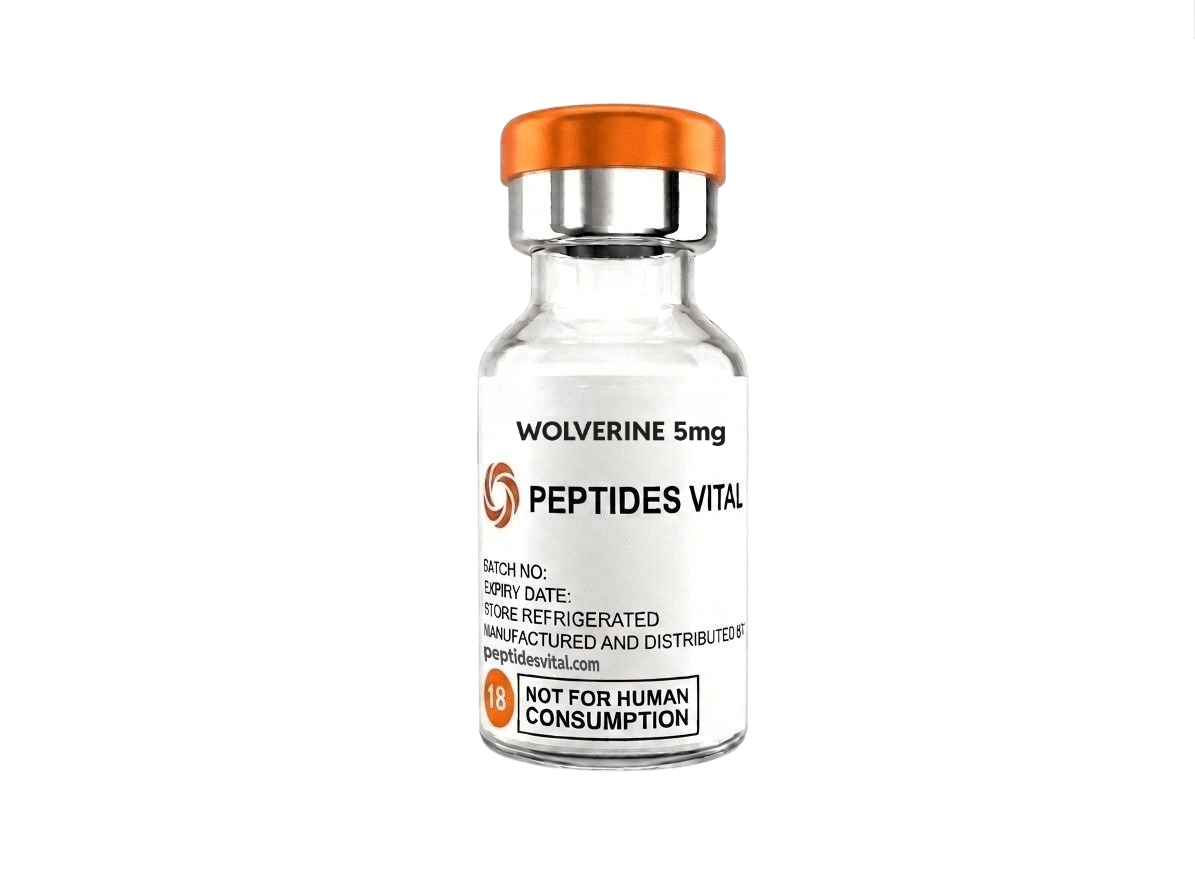
$76.00 – $90.00Price range: $76.00 through $90.00
WOLVERINE is a two-peptide research blend combining BPC-157 (5 mg) and TB-500 (5 mg) in a balanced 1:1 ratio, totaling 10 mg of lyophilized powder. BPC-157 is a synthetic 15-amino-acid peptide with the sequence Gly-Glu-Pro-Pro-Pro-Gly-Lys-Pro-Ala-Asp-Asp-Ala-Gly-Leu-Val, derived from a partial sequence of a human gastric juice protein. TB-500 is a synthetic peptide derived from thymosin beta-4, an actin-binding protein found in nearly all animal cells. Both are among the most studied peptides in tissue-repair research; the combination itself has not been studied as a single formulation. Each kit contains 10 vials of white lyophilized powder, verified by HPLC and mass spectrometry. For laboratory research use only. Not for human or veterinary use.
ℹ️ Note: 1 kit includes 10 vials
Free shipping on all orders over $200 (US) and $300 (International).
Every batch is HPLC & Mass Spectrometry verified. Full lab reports are available for every order within 30 days of purchase.
Your transactions are protected by our private, encrypted network. Supporting secure wire transfers and international invoicing.
WOLVERINE is the simplest of the BPC-157 and TB-500 blends: just the two peptides, in equal amounts, without GHK-Cu or KPV. It is the most common two-peptide pairing in tissue-repair research, because the two are studied for different mechanisms in overlapping research areas.
BPC-157 (5 mg) is a pentadecapeptide, a chain of 15 amino acids, with a molecular weight of about 1,419.5 g/mol. Its literature is mostly from animal models of tendon, ligament, gut and blood vessel tissue, with proposed mechanisms involving VEGFR2 signaling and nitric oxide pathways. It is supplied in different salt forms by different manufacturers; see BPC-157 arginate vs acetate.
TB-500 (5 mg) is a synthetic peptide derived from thymosin beta-4, a 43-amino-acid protein that binds actin, the protein behind cell shape and movement. Research on it centers on cell migration and wound closure. The exact form in each lot is confirmed by mass spectrometry on the certificate of analysis. For a full comparison of the two, see BPC-157 vs TB-500.
The reason for pairing them is mechanistic: different pathways, related research questions. That is a rationale drawn from the separate literature on each peptide, not evidence from a study of the blend.
This product is strictly for research purposes only. Not approved for human or animal use.
| Component | Amount | Structure | Molecular weight |
|---|---|---|---|
| BPC-157 | 5 mg | Gly-Glu-Pro-Pro-Pro-Gly-Lys-Pro-Ala-Asp-Asp-Ala-Gly-Leu-Val (15 aa) | 1419.5 g/mol |
| TB-500 | 5 mg | Synthetic thymosin beta-4 peptide | Confirmed on lot COA |
| Property | Value |
|---|---|
| Total | 10 mg |
| Ratio | 1:1 (BPC-157 : TB-500) |
| Kit | 10 vials per kit |
| Form | White to off-white lyophilized powder |
| Solubility | Water-soluble |
| Testing | HPLC and mass spectrometry on every batch; lot COA lists both components |
| Storage | Refrigerate at 2–8 °C (36–46 °F); −20 °C for long-term storage |
BPC-157 and TB-500 are two of the most independently studied peptides in the tissue-repair category, which is why reviews of that literature usually discuss them side by side. Most BPC-157 work comes from animal models, much of it from a single research group in Croatia that has published on the peptide since the early 1990s. Thymosin beta-4 has a broader base, including cell studies on actin dynamics and some early-stage human clinical work on the full-length protein.
Both peptides were reviewed by the FDA’s compounding advisory panel on July 23, 2026, and each was recommended by an 8-to-6 vote with 1 abstention. FDA scientists had recommended against both, citing limited human safety data. The vote concerns what licensed pharmacies may compound, not research materials, and the FDA has not yet acted on it. For how that process works, see Epitalon’s FDA status.
Need more than two components? The GLOW blend adds GHK-Cu, and the KLOW blend adds GHK-Cu and KPV.
10 mg of lyophilized peptide: 5 mg BPC-157 and 5 mg TB-500, in a 1:1 ratio.
No. WOLVERINE contains only BPC-157 and TB-500. GLOW adds GHK-Cu, and KLOW adds GHK-Cu and KPV.
BPC-157 is a 15-amino-acid peptide based on a gastric protein sequence, studied mainly in gut and soft-tissue models. TB-500 is derived from thymosin beta-4 and studied mainly for actin binding and cell migration.
No. Each peptide has its own published research, but the combined blend has not been evaluated as a single formulation.
No. An FDA advisory panel recommended both for the compounding list in July 2026, but that is not drug approval, and the FDA has not yet acted on it.
Refrigerated at 2–8 °C (36–46 °F), sealed, dry and away from light. For long-term storage, −20 °C. Here’s why freeze-dried peptides ship safely at room temperature.
| QTY | Buy 1, Buy 12+ and save 20%, Buy 3 and save 10%, Buy 6 and save 15% |
|---|---|
| Weight | 10mg |
Ryan Foster –
I was unsure before ordering, but Peptides Vitals turned out dependable.
Megan Vaughn –
I had my doubts, but the ordering process was smooth and easy.
David Collins –
Great customer support and premium service. Highly recommending others to order from Peptides Vitals
Kyle P –
Dependable products and smooth delivery
Jonathan W –
Reliable company with excellent standards
Hannah Tyler –
Very impressed with delivery speed and packaging.