- Free shipping on all orders over $200 (US) and $300 (International)

$156.00 – $195.00Price range: $156.00 through $195.00
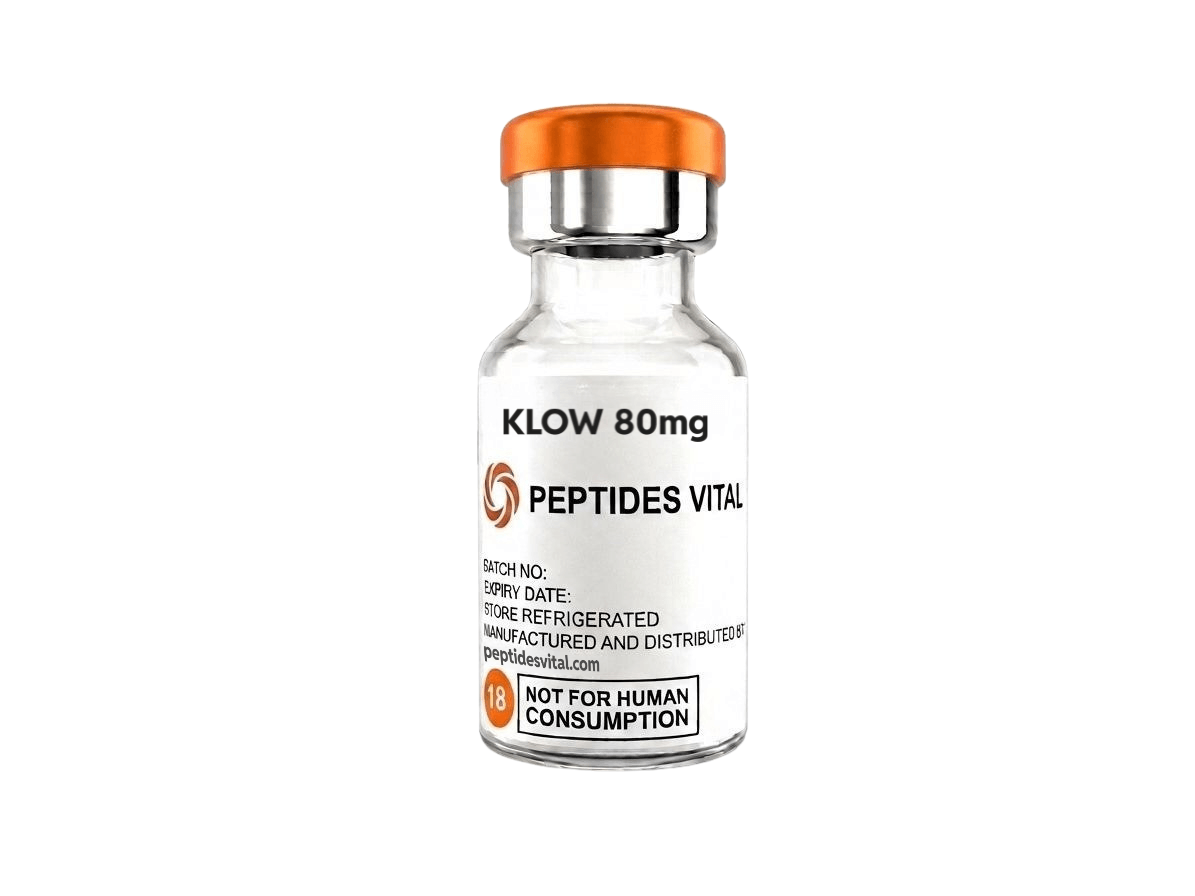
KLOW is a four-peptide research blend totaling 80 mg of lyophilized powder: BPC-157 (10 mg), TB-500 (10 mg), GHK-Cu (50 mg) and KPV (10 mg). It takes the three peptides of the GLOW blend and adds KPV, a tripeptide (lysine-proline-valine) from the C-terminal end of alpha-melanocyte-stimulating hormone that is studied in preclinical inflammation models. Each component has its own independent research literature; the four-peptide combination has not been studied as a single formulation. The powder is white to off-white with a light blue tint from the copper in GHK-Cu. Each kit contains 10 vials, with every batch verified by HPLC and mass spectrometry. For laboratory research use only. Not for human or veterinary use.
ℹ️ Note: 1 kit includes 10 vials
Free shipping on all orders over $200 (US) and $300 (International).
Every batch is HPLC & Mass Spectrometry verified. Full lab reports are available for every order within 30 days of purchase.
Your transactions are protected by our private, encrypted network. Supporting secure wire transfers and international invoicing.
KLOW is the GLOW blend with a fourth peptide added. GLOW combines BPC-157, TB-500 and GHK-Cu, three peptides studied mainly in tissue-repair and skin-remodeling models. KLOW adds KPV, which brings an inflammation-research angle to the same vial. The “K” is generally read as a nod to KPV. For a full side-by-side, read KLOW vs GLOW.
Each component has a separate research background. BPC-157 is a 15-amino-acid synthetic peptide based on a sequence from a human gastric juice protein, studied largely in animal models of gut and soft-tissue repair. TB-500 is a synthetic peptide derived from thymosin beta-4, the actin-binding protein linked to cell migration; see BPC-157 vs TB-500. GHK-Cu is the copper complex of the tripeptide glycyl-histidyl-lysine, first isolated from human plasma by Dr. Loren Pickart in 1973 and studied for decades in skin and wound-remodeling research; see what is GHK-Cu.
KPV is by far the smallest component. It matches the last three amino acids of alpha-MSH and has been studied on its own in cell and rodent models of intestinal and skin inflammation. Combining it with the other three reflects their separate, non-overlapping research areas, not evidence from a study of the blend itself.
This product is strictly for research purposes only. Not approved for human or animal use.
| Component | Amount | Structure | Molecular weight |
|---|---|---|---|
| BPC-157 | 10 mg | Gly-Glu-Pro-Pro-Pro-Gly-Lys-Pro-Ala-Asp-Asp-Ala-Gly-Leu-Val (15 aa) | 1419.5 g/mol |
| TB-500 | 10 mg | Synthetic thymosin beta-4 peptide | Confirmed on lot COA |
| GHK-Cu | 50 mg | Gly-His-Lys copper(II) complex (3 aa) | 340.4 g/mol (GHK peptide) |
| KPV | 10 mg | Lys-Pro-Val (3 aa) | 342.4 g/mol |
| Property | Value |
|---|---|
| Total | 80 mg |
| Ratio | 1:1:5:1 (BPC-157 : TB-500 : GHK-Cu : KPV) |
| Kit | 10 vials per kit |
| Form | White to off-white lyophilized powder with a light blue tint |
| Testing | HPLC and mass spectrometry on every batch; lot COA lists all four components |
| Storage | Refrigerate at 2–8 °C (36–46 °F); −20 °C for long-term storage |
KPV is the component that sets KLOW apart. Most published KPV work comes from cell studies and rodent models of intestinal inflammation, with additional work on skin cells. Researchers study it because it carries part of the anti-inflammatory activity associated with alpha-MSH in a much smaller molecule.
The other three components have larger literatures. BPC-157 research centers on animal models of gut lining and soft-tissue repair, including blood vessel formation. Thymosin beta-4 research centers on actin binding and cell migration during wound closure. GHK-Cu research spans decades of skin, collagen and wound-remodeling studies, including wide use in cosmetic science.
Three of KLOW’s components were reviewed by the FDA’s compounding advisory panel in July 2026: BPC-157, TB-500 and KPV were each recommended by an 8-to-6 vote. That concerns pharmacy compounding, not research materials, and the FDA has not yet acted on it. Injectable GHK-Cu is scheduled for the panel’s next meeting; see the FDA’s next peptide review.
80 mg of lyophilized peptide: BPC-157 (10 mg), TB-500 (10 mg), GHK-Cu (50 mg) and KPV (10 mg).
KLOW adds a fourth peptide, KPV, and has a higher total weight. GLOW contains BPC-157, TB-500 and GHK-Cu only. Compare the GLOW blend and the two-peptide WOLVERINE blend.
KPV is a tripeptide from the end of alpha-MSH, studied on its own in preclinical inflammation models. It adds an inflammation-research angle to the tissue-repair focus of the other three peptides.
No. Each peptide has independent research; the combination has not been evaluated as a single formulation in published studies.
The color comes from GHK-Cu, which is a copper complex. A light blue tint is expected.
Refrigerated at 2–8 °C (36–46 °F), sealed, dry and away from light. For long-term storage, −20 °C. The lot COA should confirm all four components; here’s what to look for on a blend COA.
| QTY | Buy 1, Buy 12+ and save 20%, Buy 3 and save 10%, Buy 6 and save 15% |
|---|---|
| Weight | 80mg |
Lauren D. –
Great experience overall. I highly recommend Peptides Vitals to anyone interested.
Ethan J –
Professional service and timely delivery.
Lukas Schneider –
TB-500 quality was excellent and exactly as described. Packaging was secure, delivery was smooth, and I’m very satisfied with the overall service.
Anna Müller –
Very impressed with the professionalism and product quality of TB-500. Everything arrived safely, well sealed, and on time. Highly recommended
Jonas Weber –
TB-500 arrived in perfect condition with careful packaging. Great customer service, fast delivery, and reliable quality throughout the process
Oliver Thompson –
The website customer service was excellent. Quick responses, professional support, and a very smooth experience from start to finish
James Harrison –
Outstanding customer service on the website. The team was responsive, reliable, and made the whole ordering process easy
Charlotte Evans –
I was impressed by how helpful and polite the customer service team was. They answered all my questions promptly and clearly