BPC-157 Arginate (PDA) vs Acetate: Which Form Did the FDA Panel Vote On?
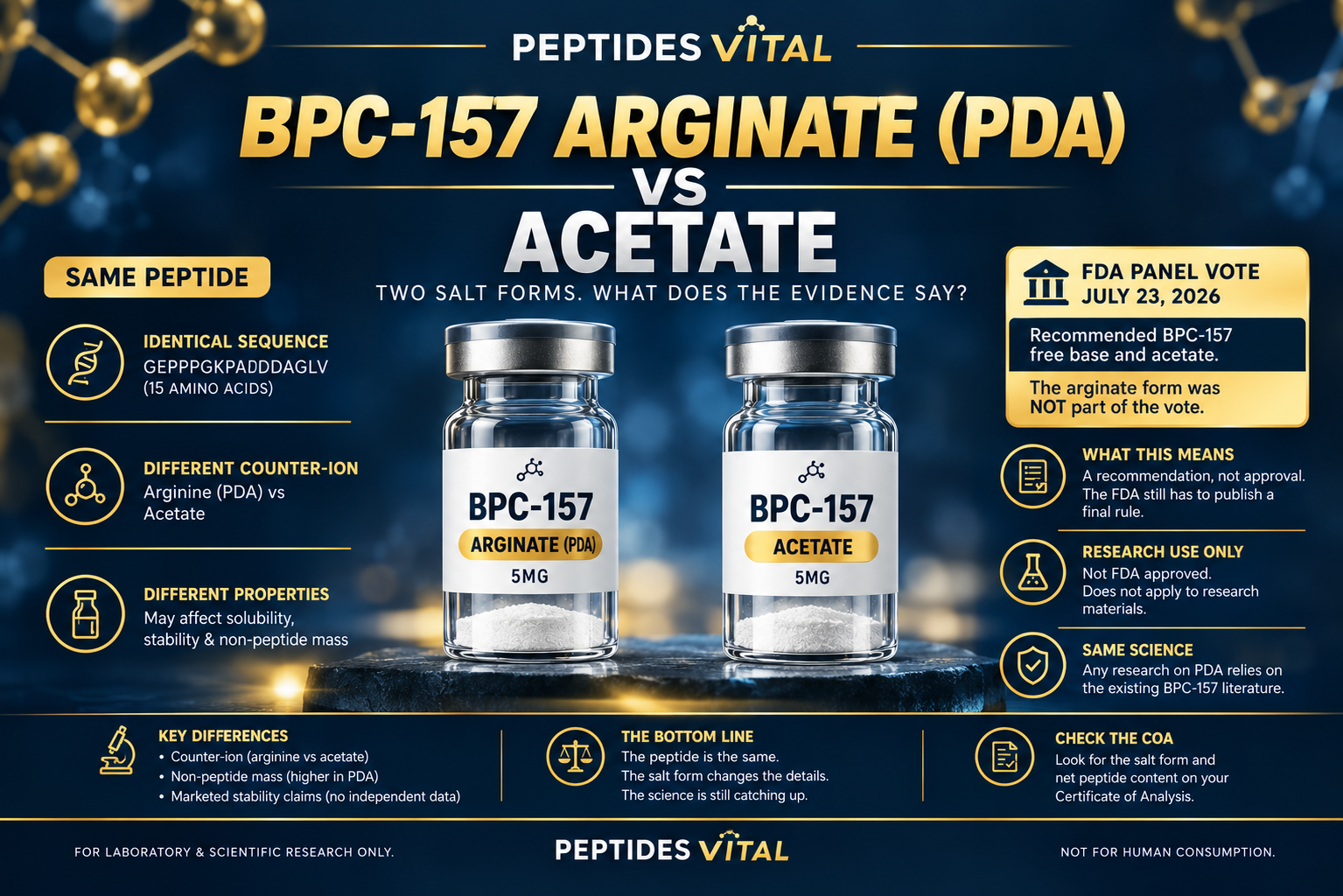
BPC-157 arginate (sold as “Pentadeca Arginate” or PDA) and BPC-157 acetate are the same 15-amino-acid peptide. The only difference is the counter-ion paired with it: arginine instead of acetate. When the FDA’s compounding advisory panel voted on BPC-157 in July 2026, it covered the free base and acetate forms only. The arginate form was not part of the vote.
What is a peptide salt form?
Most synthetic peptides are not sold as a bare molecule. They carry positive charges on basic amino acids and on the N-terminus, and those charges pair with negatively charged counter-ions. The peptide plus its counter-ions is the salt form.
Three counter-ions show up most often:
Trifluoroacetate (TFA), left over from standard synthesis and purification.
Acetate, the usual choice when TFA is exchanged out after purification.
Arginate, an arginine counter-ion, used far less often.
The amino acid sequence does not change between salt forms. What changes is the non-peptide mass in the vial, and properties like solubility and stability in solution.
BPC-157 arginate vs acetate: what actually differs
The peptide is identical. BPC-157 is the sequence GEPPPGKPADDAGLV in both forms. Our BPC-157 vs TB-500 guide covers its background.
BPC-157 acetate
BPC-157 arginate (PDA)
Peptide sequence
GEPPPGKPADDAGLV
GEPPPGKPADDAGLV
Counter-ion
Acetate
Arginine
How common
Standard form from most suppliers
Niche; mostly marketed as “Pentadeca Arginate”
Named in the July 2026 FDA panel vote
Yes
No
Stability claims
Typical for an acetate peptide salt
Marketed as more stable in acidic conditions; no independent data we could find
Non-peptide mass per molecule
Lower
Higher (arginine is heavier than acetate)
Where “Pentadeca Arginate” came from
The PDA name rose after the FDA placed BPC-157 in Category 2 in September 2023. Some sellers argued the arginate salt was a separate substance not covered by that listing. As of April 2026, the FDA had not issued any guidance treating PDA as distinct from BPC-157. Because the sequence is the same, any research claim made for PDA rests on the existing BPC-157 literature.
Which BPC-157 forms did the FDA panel vote on?
On July 23, 2026, the FDA’s Pharmacy Compounding Advisory Committee voted 8 to 6, with 1 abstention, to recommend adding BPC-157 to the 503A bulks list. The recommendation named two forms: BPC-157 free base and BPC-157 acetate. The arginate salt was not reviewed.
What that means in practice:
The vote is a recommendation. The FDA still has to accept it and publish a proposed rule. Until a rule is final, no BPC-157 form is formally on the list.
If a rule follows, it would cover the forms reviewed. Nothing in the record extends it to the arginate salt.
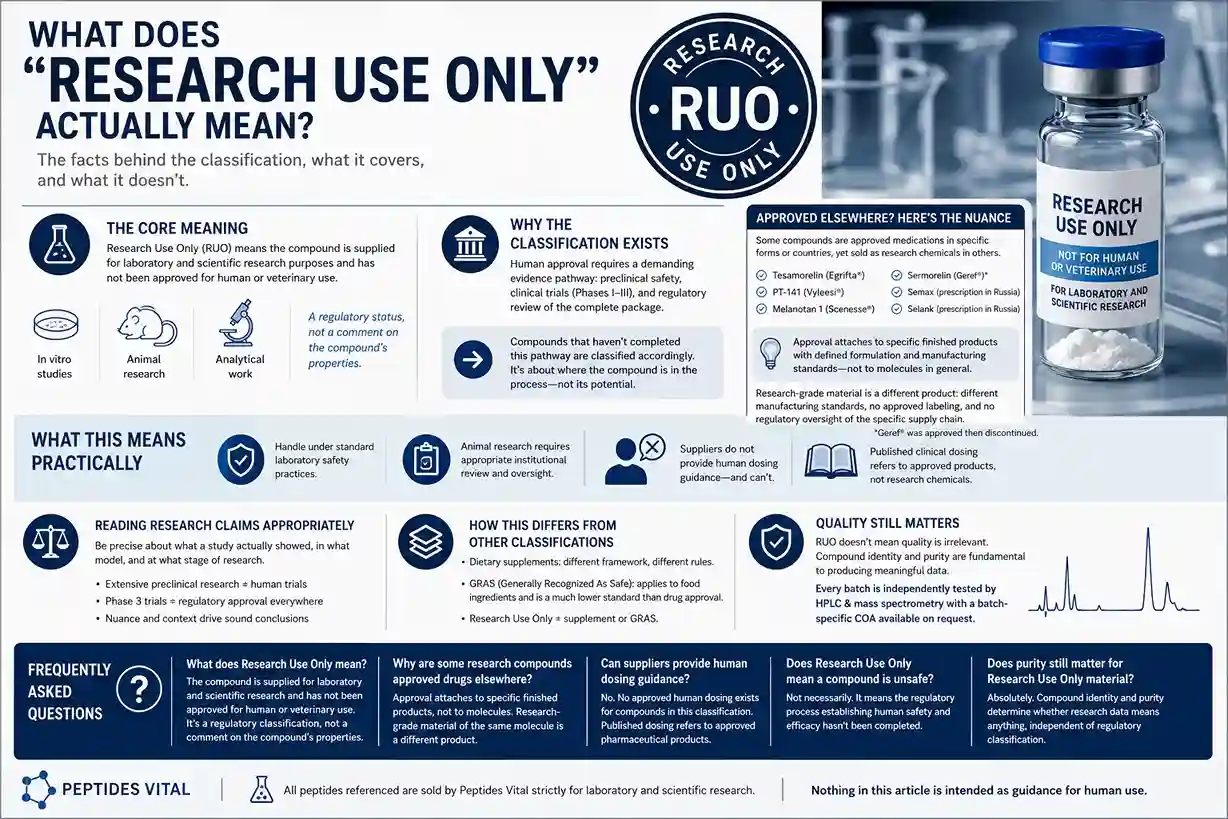
None of this touches research-use-only materials. The bulks list governs licensed compounding pharmacies, not laboratory reagents. See what research use only means.
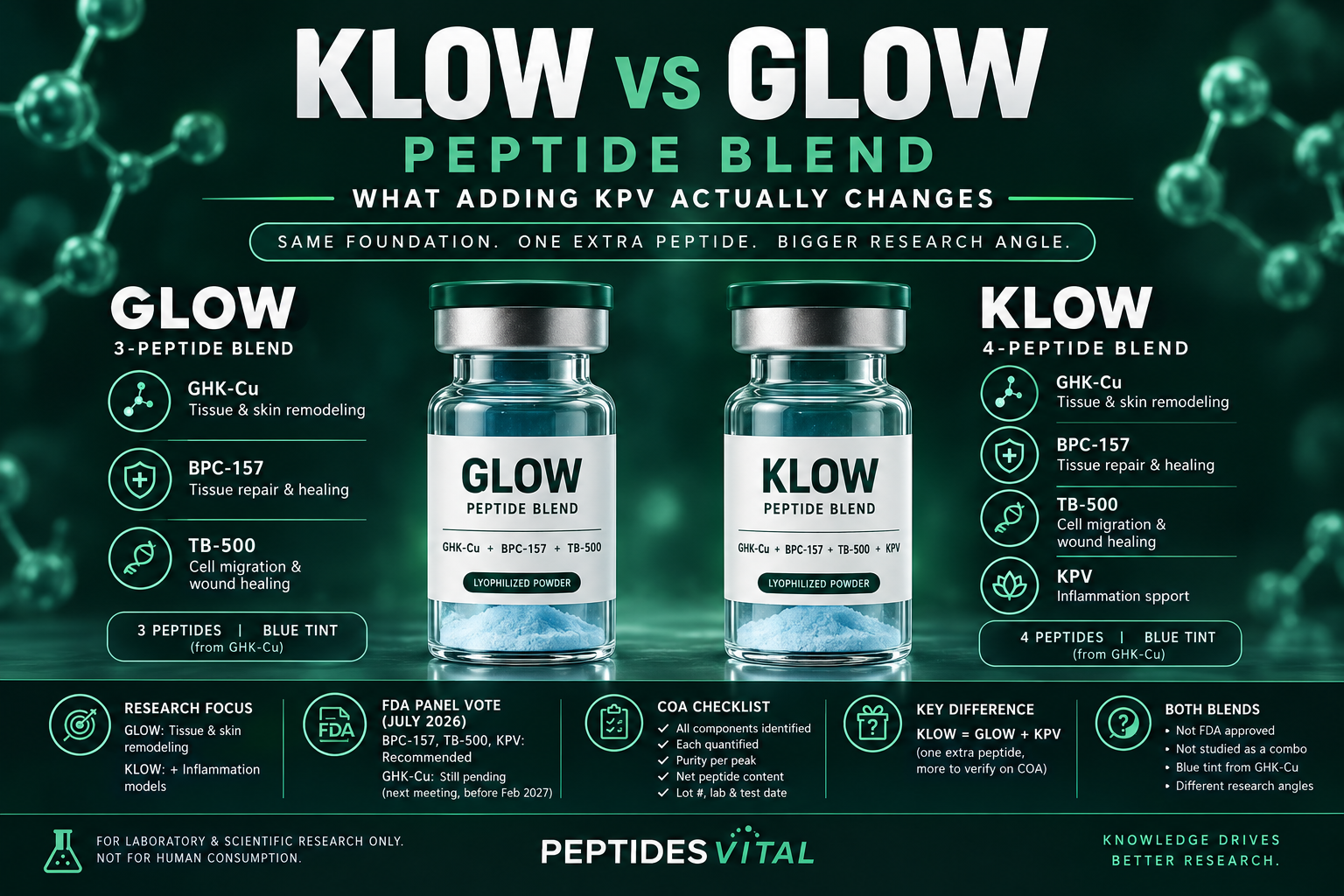
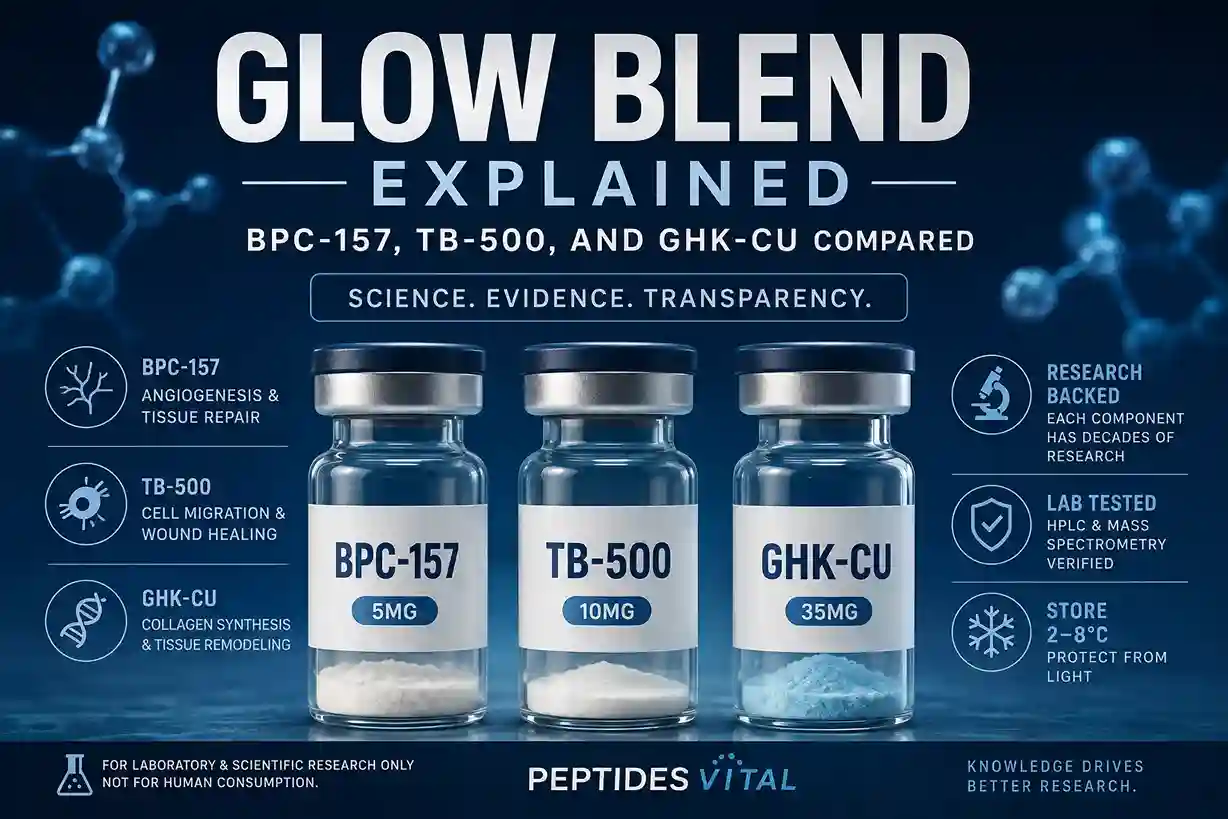
The same day, the panel also backed KPV and TB-500, two peptides that sit alongside BPC-157 in the KLOW and GLOW blends.
Why the salt form changes how much peptide is in the vial
Counter-ions add weight that is not peptide. Arginine weighs about 174 g/mol, roughly three times more than acetate at about 59 g/mol. So for every counter-ion attached, an arginate salt carries more non-peptide mass than an acetate salt.
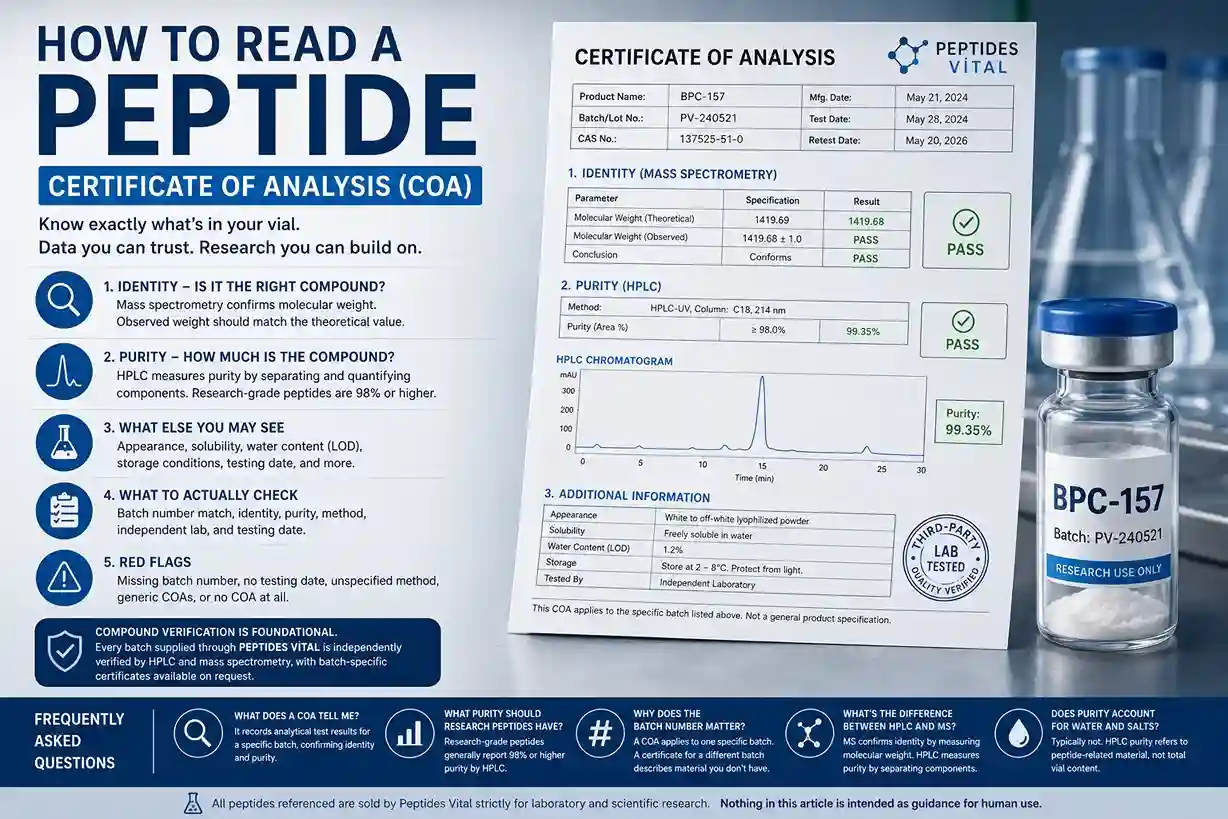
That makes one question important when you compare two vials labeled “10 mg”: is that 10 mg of peptide, or 10 mg of salt? The answer is on the COA, as net peptide content. Two vials can both show 99% purity and still hold different amounts of actual BPC-157.
Yes, in sequence. Pentadeca Arginate (PDA) is BPC-157 paired with an arginine counter-ion instead of acetate. The 15 amino acids are identical.
Is BPC-157 arginate more stable than acetate?
It is marketed that way, mainly for acidic conditions. We have not found independent, peer-reviewed data comparing the two salts directly, so treat the claim as unverified.
Which BPC-157 form did the FDA panel recommend?
The free base and acetate forms, by an 8-6 vote with 1 abstention on July 23, 2026. The arginate form was not reviewed.
Is BPC-157 FDA approved now?
No. The panel’s vote is a non-binding recommendation about compounding. BPC-157 is not an FDA-approved drug in any salt form.
What does “free base” mean?
It describes the peptide without a specified counter-ion. In practice, most commercial BPC-157 is supplied as a salt, and the COA should say which one.
Should the salt form be listed on a COA?
Yes. A complete COA names the salt form and states net peptide content, so you know how much of the weighed powder is the peptide itself.