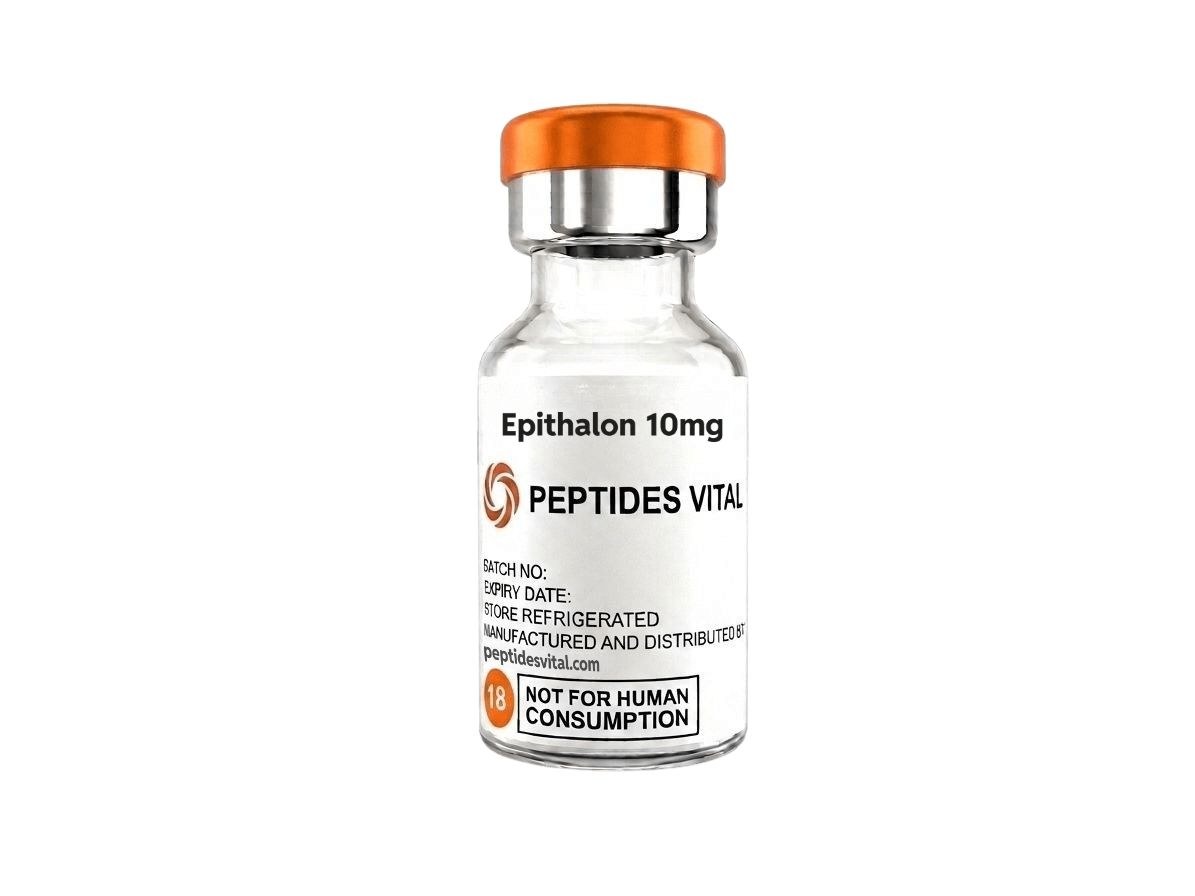
Epithalon is a synthetic tetrapeptide, a chain of four amino acids, sequence Ala-Glu-Asp-Gly, molecular formula C14H22N4O9, molecular weight 390.34 g/mol, CAS 307297-39-8. It was first synthesized in the 1990s, based on the amino acid composition of epithalamin, a peptide extract derived from the bovine pineal gland.
Epithalon’s research profile is closely tied to the work of Vladimir Khavinson and colleagues in Russia, who have published extensively on peptide bioregulators and their proposed effects on aging. Epithalon specifically has been studied for its reported ability to activate telomerase, the enzyme responsible for maintaining the protective end-caps of chromosomes, in cell culture and animal models. It’s worth noting for research context that this body of evidence is concentrated in Russian-language literature from a relatively small number of research groups, with limited independent replication in Western peer-reviewed journals, useful context for evaluating the strength of the evidence rather than treating longevity claims as settled science.
As a tetrapeptide, Epithalon is one of the smallest biologically studied peptides. Its four-residue sequence gives it two acidic side chains (glutamic acid and aspartic acid), making the molecule negatively charged at physiological pH. It dissolves readily in water and appears as a white lyophilized powder. This product is strictly for research purposes only.
PubChem Reference: View compound profile on NIH PubChem

Prof. Wei-Cheng Lin –
Perfect match for the published amino acid sequence. Our mass spec confirmed identity with no contaminants. Reliable source for Epithalon will definitely reorder for our ongoing epigenetic studies.
Dr. Lena M. Hofstadter –
Consistent results across three separate orders. Epithalon is a delicate tetrapeptide, yet this supplier delivered excellent purity each time. Ideal for research on pineal gland peptides and aging models
Prof. George K. Alexandrou –
Clean peptide with no unexpected degradation peaks. CAS 307297-39-8 verified in our lab. The lyophilized powder reconstituted easily in saline. Would give 5 stars if the vial had a resealable cap, but the quality itself is top-notch
Dr. Fatima A. Rahman –
Good stability in solution over 24 hours. The 99% purity claim held up under our analysis. Research-grade quality at a fair price. Minor delay in shipping to the UAE, but product was well-packaged and intact
Dr. Svetlana O. Morozova –
Epithalon performed excellently in our in vitro telomerase expression studies. The 99% purity was confirmed via HPLC. Stable tetrapeptide with reliable bioactivity across multiple experiments