GHK-Cu

Customer Review 5.00
Rated 5 out of 5

Price range: $33.00 through $64.00

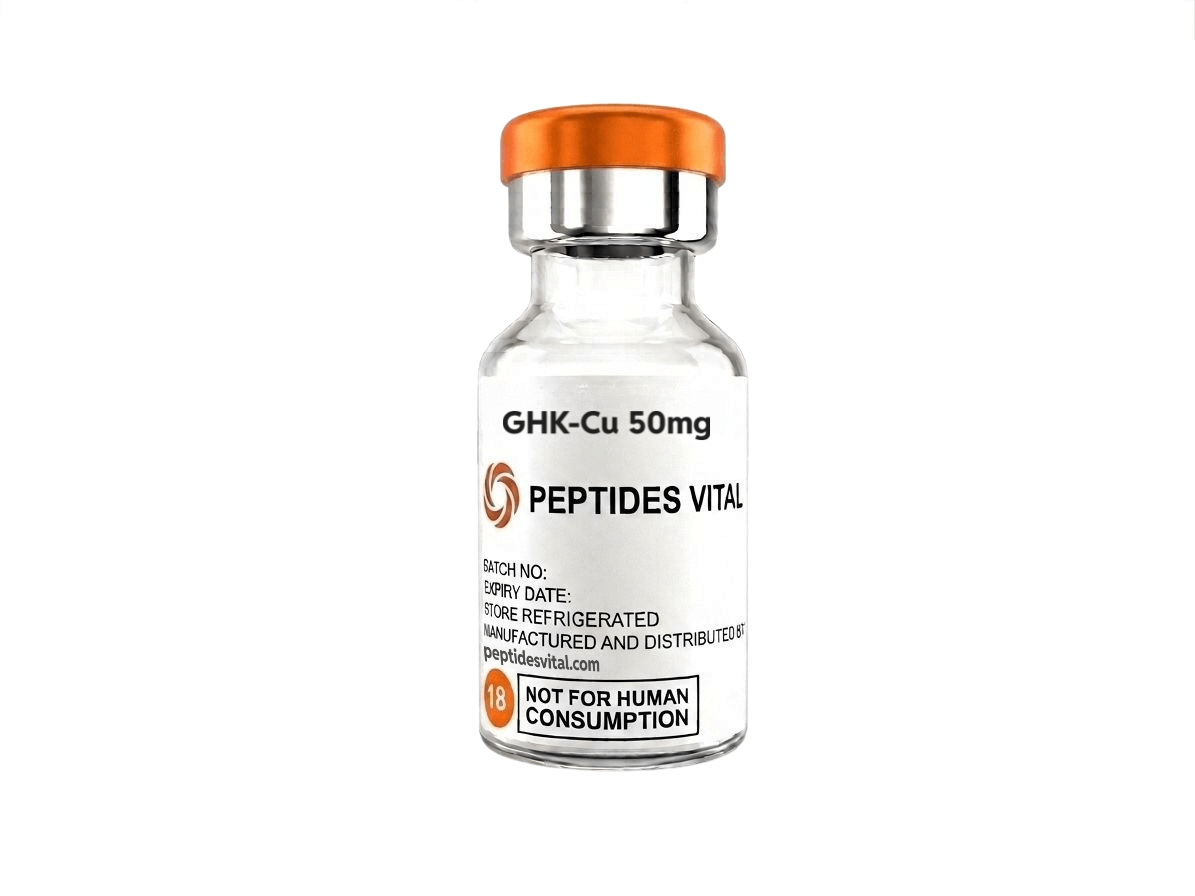
 GHK-Cu is a copper-binding tripeptide made of glycine, histidine, and lysine bound to a copper(II) ion. First identified in 1973 by researcher Loren Pickart during studies of human plasma, where he observed the complex was present at higher concentrations in younger blood samples than older ones, a finding that launched decades of research into its role in tissue repair and skin aging. It has the molecular formula C14H21CuN6O4, molecular weight 404.9 g/mol, CAS 89030-95-5. GHK-Cu occurs naturally in trace amounts in human plasma, saliva, and urine. It is supplied as a distinctive blue crystalline powder, highly soluble in water. This product is strictly for research purposes only.

ℹ️ Note: 1 kit includes 10 vials

Share it :
Global Delivery

Free shipping on all orders over $200 (US) and $300 (International).

Purity Guaranteed

Every batch is HPLC & Mass Spectrometry verified. Full lab reports are available for every order within 30 days of purchase.

Secure B2B Payment

Your transactions are protected by our private, encrypted network. Supporting secure wire transfers and international invoicing.

Description

GHK-Cu is a copper-binding tripeptide, glycine, histidine, and lysine bound to a copper(II) ion, molecular formula C14H21CuN6O4, molecular weight 404.9 g/mol, CAS 89030-95-5. First identified in 1973 by Loren Pickart during research on human plasma, where he observed that this small copper-peptide complex occurred at higher concentrations in younger blood samples than older ones.

The copper ion is coordinated to the peptide through the nitrogen atoms of the glycine and histidine residues, giving the compound its distinctive blue color in crystalline form, an unusual property among research peptides. GHK-Cu is classified as a metallopeptide, a peptide that incorporates a metal ion as part of its core structure, and occurs naturally in trace amounts in human plasma, saliva, and urine. This natural occurrence combined with the age-related decline Pickart originally observed is the basis for most of the compound’s research interest in tissue repair, collagen synthesis, and skin biology.

The compound is supplied as a blue crystalline powder, highly soluble in water, stored refrigerated at 2–8°C and protected from light. This product is strictly for research purposes only, and should only be handled by qualified researchers in appropriate laboratory settings.

PubChem Reference: View compound profile on NIH PubChem

This product is strictly for research purposes only. It is not approved for human or animal use and should only be handled by qualified researchers in appropriate laboratory settings.

Key Characteristics

MOLECULAR PROFILE

Formula: C14H21CuN6O4

Weight: 404.9 g/mol

CAS: 89030-95-5

Structure: Gly-His-Lys (with bound copper)

PHYSICAL PROPERTIES

Form: Blue crystalline powder (the blue color comes from the copper)

Solubility: Highly water-soluble

Natural Occurrence: Found in human plasma, saliva, and urine

Storage: Keep refrigerated 36–46 °F (2–8 °C), protect from light

GHK-Cu in Published Research

 GHK-Cu has one of the longer research histories of any peptide in this category, spanning more than five decades since Pickart’s original 1973 observation. Published research has investigated its effects on collagen and elastin synthesis, matrix metalloproteinase (MMP) regulation involved in tissue remodeling, antioxidant activity, and hair follicle stimulation. Because of this collagen and remodeling research, it’s frequently studied both topically (in dermatology-adjacent research) and via injection, two very different delivery contexts worth distinguishing when reviewing the literature.

Frequently Asked Questions :

What is GHK-Cu studied for?

Collagen synthesis, tissue remodeling, antioxidant activity, and hair follicle research, building on its natural role in the body.

Injection vs. topical, does it matter?

Yes, most published GHK-Cu research separates these delivery routes, since bioavailability and effects differ substantially between topical and injectable use.

What benefits are reported in studies?

Research associates it with increased collagen/elastin production, MMP regulation, and hair growth-related effects, primarily from preclinical and dermatology-adjacent studies.

How should it be reconstituted and stored?

Bacteriostatic water, refrigerate 2–8°C, protect from light.

Where can I buy it?

50mg and 100mg kits, HPLC/MS verified.

Additional information

Weight

50mg, 100mg

4 reviews for GHK-Cu

  1. Dr. Sofia L. Monteiro

    Truly remarkable batch-to-batch consistency. GHK-Cu from Peptides Vital outperformed two other major vendors in our collagen synthesis ELISA. Copper content was spot-on. A five-star product across every metric

  2. Dr. Jasmine K. Thorne

    Best GHK-Cu we’ve used in five years. The 99% purity claim is honest our HPLC showed 99.3%. Minimal free copper contamination, which is a common issue with cheaper sources. This will be our exclusive supplier going forward

  3. Prof. Anders E. Nordström

    Flawless every time. Matrix metalloproteinase inhibition assays gave textbook results. The price point ($33–$64) is excellent for this level of quality. Lyophilized powder reconstitutes immediately. Can’t recommend enough

  4. Prof. Miguel R. Herrera

    Remarkable stability compared to other suppliers we’ve tested. GHK-Cu retained full bioactivity for weeks when stored properly. CAS 89030-95-5 verified. A true workhorse for our wound healing and anti-aging research models

Add a review

Your email address will not be published. Required fields are marked *