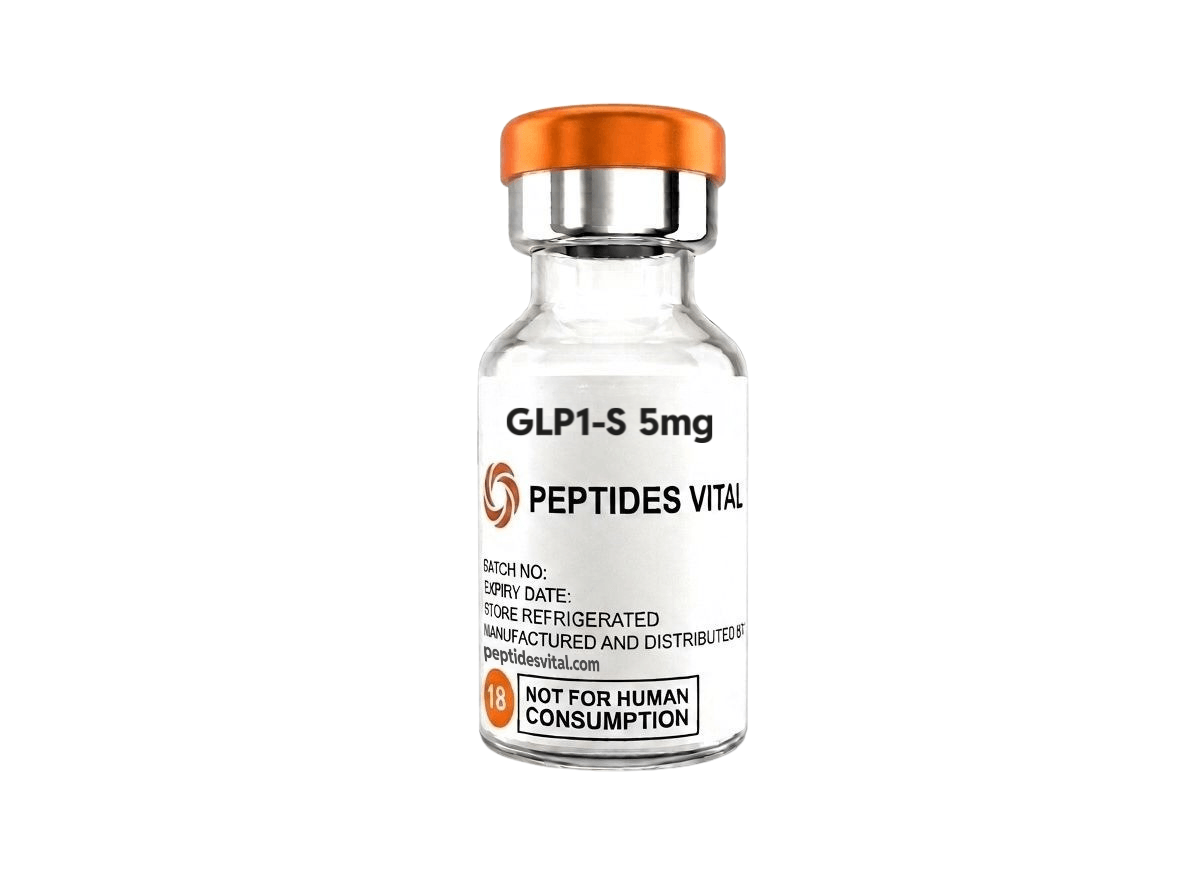
GLP1-S is a synthetic analog of GLP-1, molecular formula C187H291N45O59, molecular weight 4,113.64 g/mol, CAS 910463-68-2, first described in the scientific literature in 2007, classified as a GLP-1 receptor agonist.
The structural modifications that distinguish GLP1-S from native GLP-1 are well characterized in the incretin research literature: substitution of alanine at position 8 with alpha-aminoisobutyric acid (Aib), which resists DPP-4 enzymatic breakdown, and a C-18 fatty diacid chain attached via a linker at position 26, which enables albumin binding for an extended half-life. These are the same category of modifications used in semaglutide, giving GLP1-S a strong mechanistic grounding in one of the most extensively studied drug classes in modern pharmacology, GLP-1 receptor agonists, which include approved drugs like Ozempic, Wegovy, and Victoza. Native GLP-1 itself breaks down within minutes in circulation, which is precisely the limitation these structural modifications are designed to address.
GLP1-S appears as a white lyophilized powder that is soluble in water. This product is strictly for research purposes only.
PubChem Reference: View compound profile on NIH PubChem

Dr. Sophia L. Bennett –
Solid GLP1-S works exactly as expected in our insulin secretion assays. The lyophilized powder arrived intact with prompt shipping to Canada. Minor note: a longer expiration date would be appreciated, but quality is excellent
Prof. James T. Harrington –
Very reliable peptide for incretin research. Reconstitutes easily and remains stable in solution for up to 48 hours. Would give 5 stars if the vial included a desiccant packet, but the product itself is top-notch
Dr. Fatima Z. Al-Mansoori –
performance across multiple batches. GLP1-S from Peptides Vital outperformed samples from two other vendors in our cAMP activation assays. Highly recommend for any GLP-1 receptor studies.
Dr. Elena R. Hofmann –
Excellent quality GLP1-S. Our GLP-1 receptor activation assays showed potent and reproducible results. CAS 910463-68-2 confirmed via LC-MS. The 99% purity claim is accurate no visible impurities
Prof. Lukas P. Novak –
Consistent 99% purity as advertised. Our HPLC analysis showed a single sharp peak with no degradation byproducts. CAS 910463-68-2 verified. Will definitely reorder for our ongoing metabolic research