- Free shipping on all orders over $200 (US) and $300 (International)
Skin and tissue repair is one of the better-developed areas in peptide research, with several compounds having decades of published work behind them. It’s also an area where the distinction between topical and systemic research matters enormously, and where blend formulations are common enough to create confusion about what’s actually been studied.
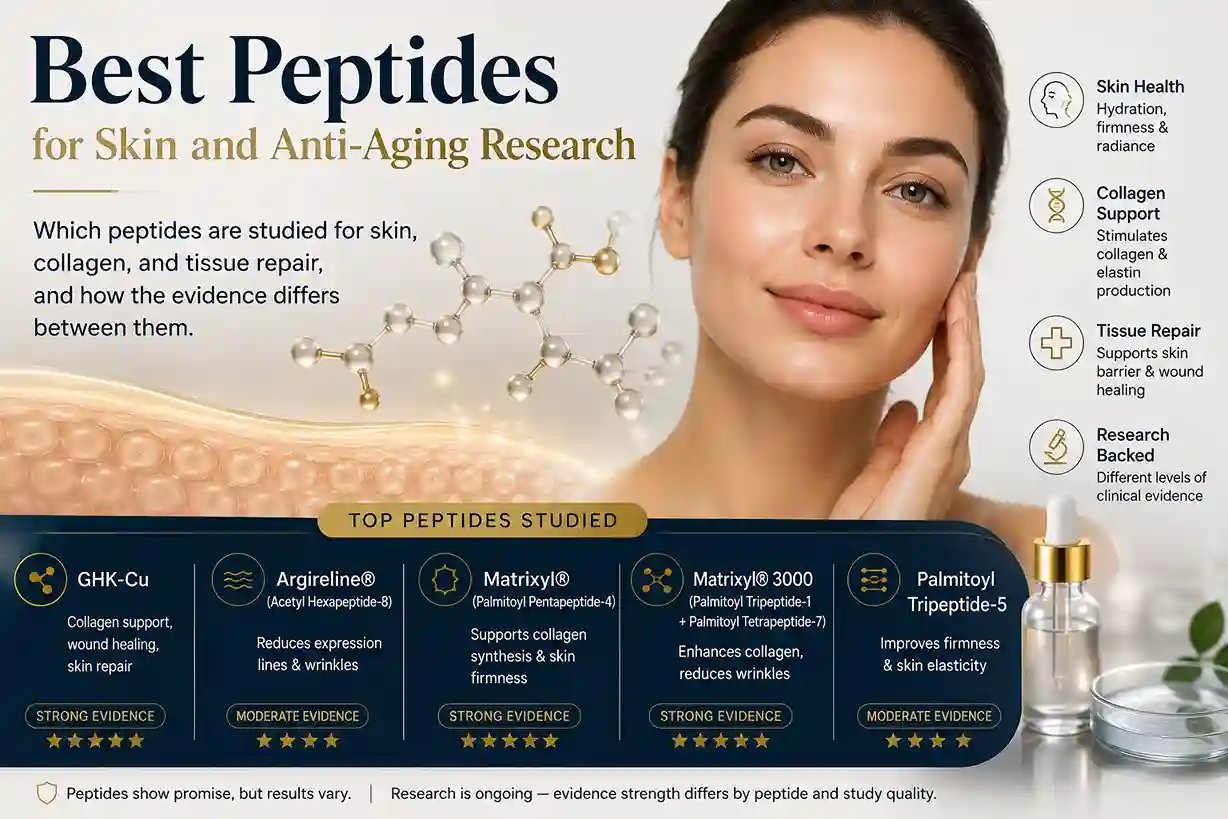
GHK-Cu has the longest research history of any compound in this category, dating to its identification in 1973 by Loren Pickart during studies of human blood plasma. His observation that the complex appeared at higher concentrations in younger plasma than older plasma is what launched five decades of subsequent research. See the GHK-Cu product page.
It’s a copper-binding tripeptide, glycine, histidine, and lysine bound to a copper(II) ion, and it occurs naturally in human plasma, saliva, and urine. Published research has examined collagen and elastin synthesis, matrix metalloproteinase regulation involved in tissue remodeling, antioxidant activity, and hair follicle stimulation.
One critical distinction when reviewing GHK-Cu literature: studies separate topical application from injection, and these have meaningfully different bioavailability profiles. Results from one delivery route don’t automatically transfer to the other, and dermatology-adjacent research has largely focused on topical use.
Both of these compounds appear frequently in skin and repair discussions, though their primary research bases are broader than skin alone. BPC-157 is studied largely for gut lining repair and tendon healing, working through VEGFR2 activation and nitric oxide signaling. TB-500 is studied for cell migration through its actin-binding mechanism.
Where TB-500 connects more directly to skin research: published rodent studies of full-thickness skin wounds have reported meaningfully faster re-epithelialization compared to controls, along with improved wound contraction. Its full-length parent molecule, Thymosin Beta-4, has been through human clinical trials for chronic wounds under the name RGN-137.
It’s worth noting that TB-500, the shorter synthetic fragment, is not chemically identical to the full-length molecule used in those human trials, though it contains the same core actin-binding region.
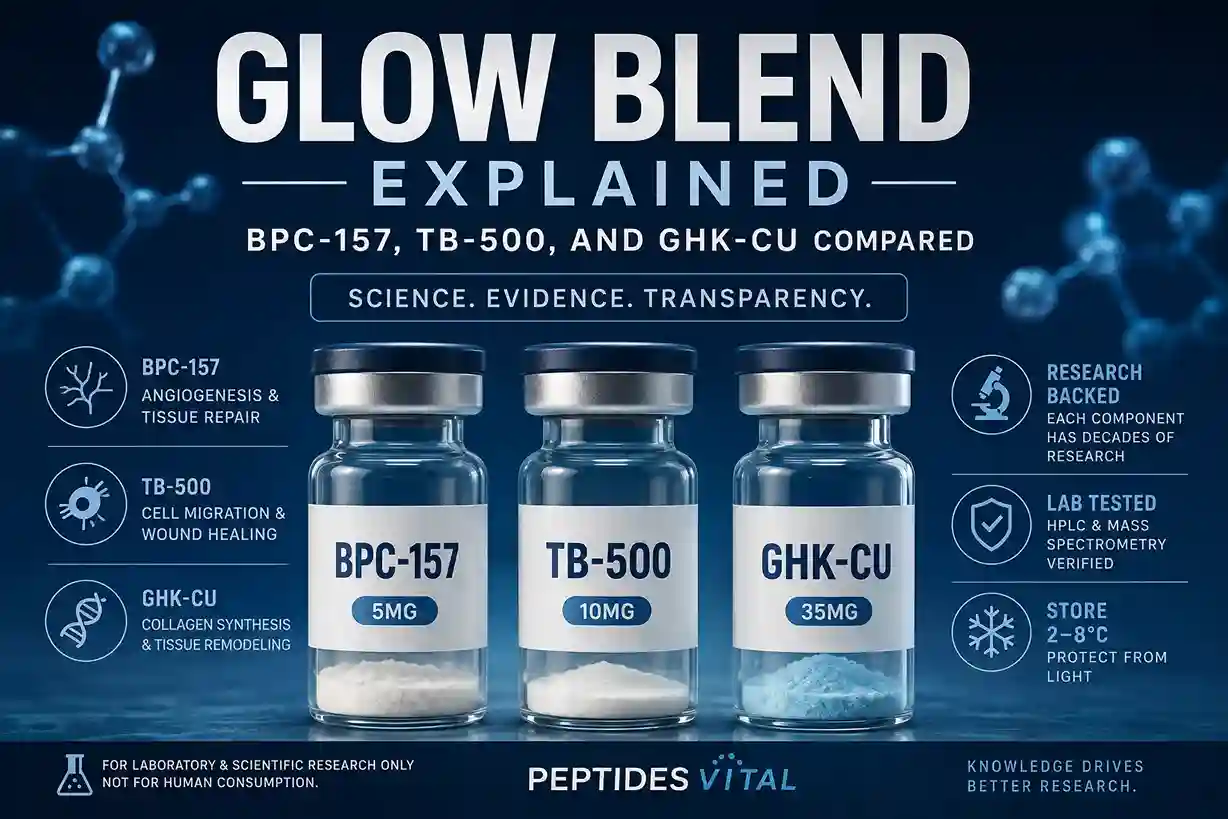
Two blends combine these compounds specifically for repair-focused research. The GLOW blend combines BPC-157, TB-500, and GHK-Cu. The KLOW blend adds KPV, a tripeptide studied for anti-inflammatory effects.
The rationale behind combining them is mechanistic complementarity rather than trial evidence. BPC-157’s angiogenesis focus, TB-500’s cell migration focus, and GHK-Cu’s collagen and remodeling focus address different stages of tissue repair rather than duplicating each other.
Stating this clearly matters: none of these blends has been evaluated as a single formulation in published research. The reasoning comes entirely from each component’s individual literature, which is a meaningful distinction when assessing what the evidence supports.
KPV is a tripeptide derived from the C-terminal region of alpha-melanocyte-stimulating hormone. What distinguishes it from other alpha-MSH-derived compounds is that its anti-inflammatory activity appears to work independently of melanocortin receptor binding, meaning it doesn’t produce the pigmentation effects associated with MC1R activation. See the KPV product page.
Most KPV research centers on intestinal inflammation models rather than skin, but its inclusion in the KLOW blend reflects interest in addressing inflammation alongside structural repair.
More than most peptide research categories, skin and tissue repair research is shaped by how a compound is delivered, and this deserves specific attention.
Skin is a barrier by design. Its primary biological function is keeping things out, which means topically applied compounds face a genuine obstacle to reaching the tissue layers where collagen synthesis and remodeling occur. Molecular size, charge, and formulation all affect whether meaningful amounts penetrate.
Injection bypasses that barrier entirely but introduces different considerations around systemic distribution and whether the compound concentrates where the research question actually lies. Neither route is universally correct, but conflating findings between them is a common error when reviewing this literature. A study showing topical efficacy says little about injectable use and vice versa.
Skin and tissue repair has a stronger evidence base than some peptide research areas but weaker than others.
GHK-Cu’s five decades of research and TB-500’s human clinical trial history through its parent molecule give this area more depth than, for example, mitochondrial-derived peptide research, which dates only to 2015. But it lacks the regulatory-grade Phase 3 evidence found in GLP-1 or GHRH analog research where approved pharmaceuticals exist.
A few practical markers help separate stronger studies from weaker ones in this area.
Check whether the study specifies delivery route, since results are not transferable between topical and injectable use. Check whether it used the full-length molecule or a fragment, particularly with TB-500, where human trial data comes from the full Thymosin Beta-4 molecule rather than the shorter fragment sold as a research compound.
Check whether findings come from animal models, cell culture, or human subjects, since each supports different kinds of conclusions. And for blend formulations, check whether the study examined the blend itself or the individual components, since the distinction is frequently blurred in secondary sources describing this research.
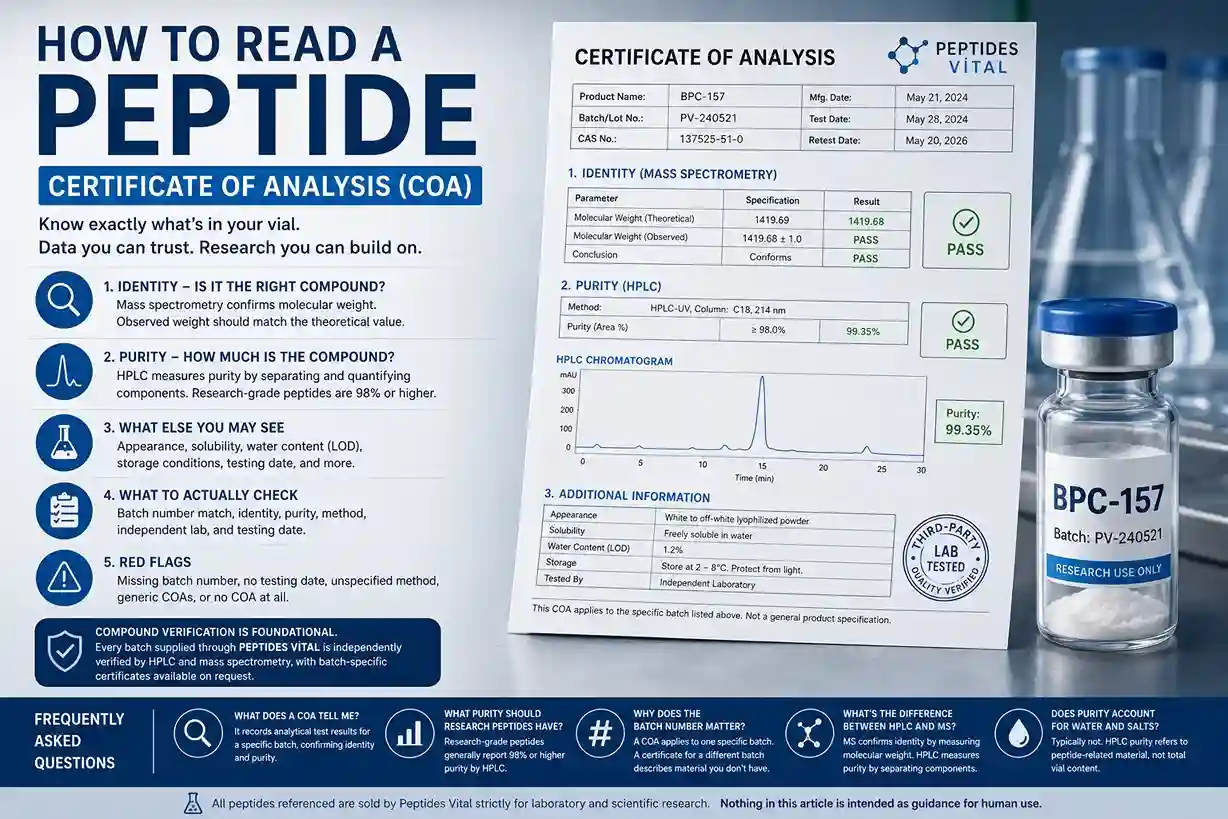
GHK-Cu requires light protection in addition to refrigeration, due to the light sensitivity of copper complexes. The others follow standard practice: reconstitution with bacteriostatic water and refrigerated storage at 2 to 8 degrees Celsius. All batches supplied through Peptides Vital are independently verified by HPLC and mass spectrometry.
Which peptide has the longest skin research history?
GHK-Cu, identified in 1973, with over five decades of published research on collagen synthesis and tissue remodeling.
Are the GLOW and KLOW blends clinically studied?
Not as formulations. Each component has independent research, but the specific combinations have not been evaluated as single formulations in published studies.
Does topical GHK-Cu research apply to injectable use?
Not directly. Bioavailability differs substantially between routes, and published studies typically specify which was used.
What does KPV add to a repair-focused blend?
Anti-inflammatory activity, studied primarily in intestinal inflammation models, working independently of melanocortin receptor pathways.
All peptides referenced are sold by Peptides Vital strictly for laboratory and scientific research. Nothing in this article is intended as guidance for human use.